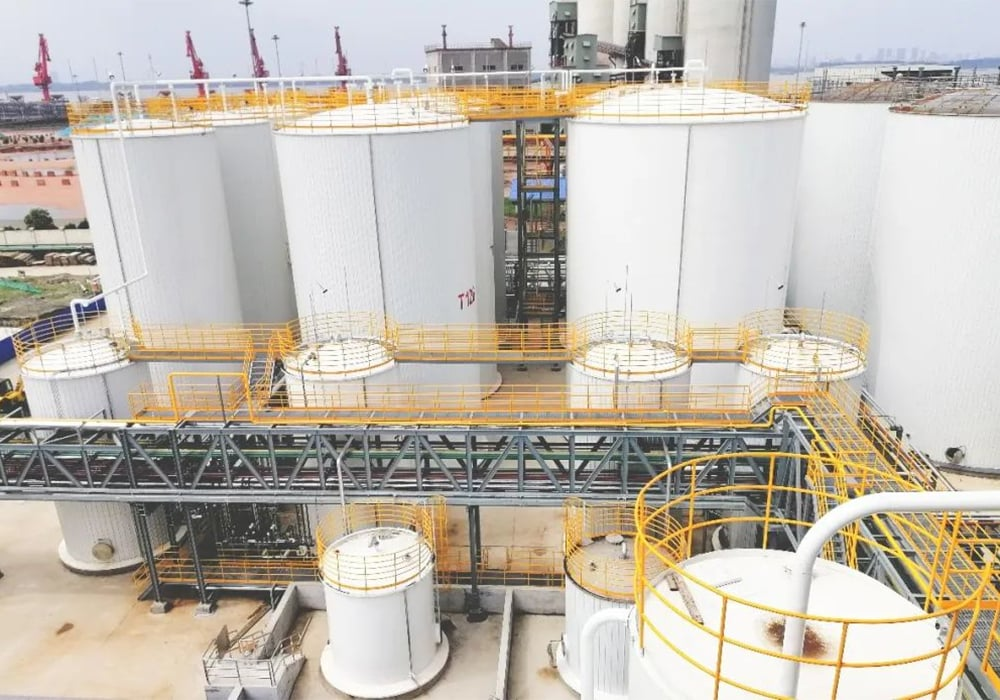
Deodorization is one of the most energy-intensive stages in edible oil refining. The operating efficiency of steam ejectors and vacuum systems directly impacts production costs and final oil quality. The effective condensation of condensable gases from the deodorization tower is critical not only for maintaining stable vacuum levels but also for controlling overall steam consumption.
The Energy Bottleneck of Conventional Processes
In conventional deodorization vacuum systems, cooling water for the atmospheric condenser is typically circulated through a cooling tower. During summer months, elevated cooling water temperatures reduce condenser efficiency, leading to incomplete condensation of condensable gases. This increases the load on downstream steam ejectors and raises overall steam consumption. Additionally, odorous emissions from cooling towers create environmental concerns for surrounding areas.
The Chilled Water–Cooling Water Heat Exchange Solution
Zhengzhou Ocean has developed a vacuum system condenser cooling water process and equipment package for the deodorization stage. The system incorporates a chiller unit and heat exchanger between the circulating water tank and the water distribution header, enabling indirect heat exchange between chilled water and cooling water.
In operation, chilled water from the chiller unit exchanges heat with the cooling water that serves the atmospheric condenser, reducing the cooling water temperature before it enters the condenser. This design significantly enhances vacuum pump capacity and condensable gas condensation efficiency, reducing the load on downstream steam ejectors and lowering water vapor consumption—substantially reducing the overall energy consumption of the steam jet vacuum system.
Dual Benefits: Energy Savings and Environmental Compliance
The application of this technology delivers measurable energy savings. In rice bran oil refining projects incorporating chilled vacuum and energy-saving deodorization technology, steam consumption has been reduced by approximately two-thirds, achieving levels below 49 kg per ton of oil.
From an environmental perspective, the fully enclosed vacuum system eliminates atmospheric emissions that would otherwise occur through cooling towers. Fatty acids and other odor-causing compounds are completely condensed within the chilled water loop, preventing air pollution and effectively solving the odor emission challenge that has long troubled oil refining facilities.
Integrated Deodorization Technology Portfolio
Zhengzhou Ocean has developed a comprehensive portfolio of deodorization technologies. In addition to the cooling water circulation process, the company holds patents for vacuum heat recovery heat exchangers in the stripping-deodorization process and for dry deodorization processes. The dry deodorization process can reduce steam consumption by 20–30%, increase finished oil yield by 20–30%, and reduce the formation of free fatty acids and trans fatty acids.
Together, these technologies offer a complete solution for oil refiners—from vacuum system optimization to deodorization process upgrades—delivering significant energy savings and environmental benefits while maintaining the flavor quality and stability of finished oils.
