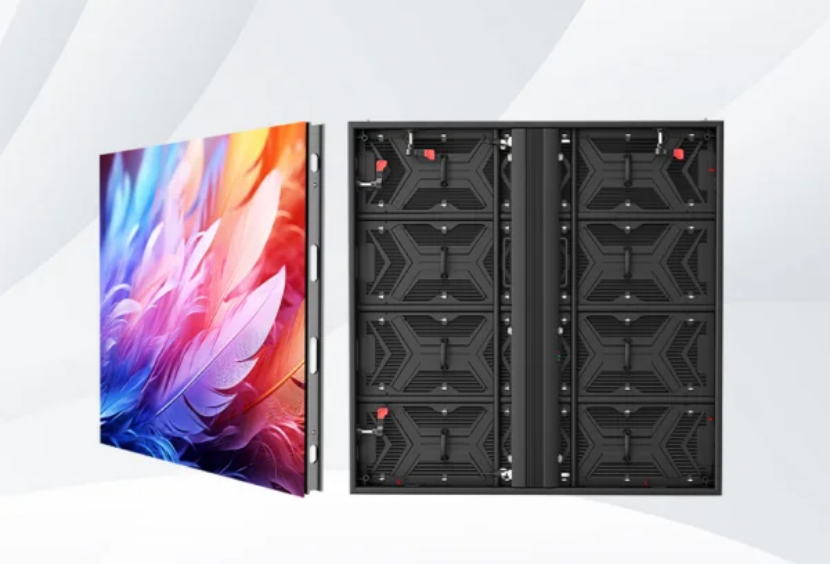
Investing in large-scale outdoor digital infrastructure requires a sophisticated understanding of how hardware interacts with unpredictable environmental variables. For project managers and engineering consultants, the selection of an outdoor LED display screen is a high-stakes decision where technical specifications directly impact long-term operational costs and audience engagement. As a specialized industry leader, LEDFUL has engineered thousands of global installations, from massive stadium perimeters to high-brightness commercial billboards, providing a foundation of data-driven insights for professional buyers.
When evaluating outdoor LED display panels, the goal is to balance visual impact with structural integrity. Below are the seven critical engineering factors that must be analyzed to ensure your visual display performs at its peak for years to come.
Ingress Protection (IP) and Environmental Resilience
The primary threat to any outdoor installation is moisture and particulate matter. Professional-grade outdoor LED display panels must possess a minimum rating of IP65 to ensure the internal circuitry is completely sealed against heavy rain and dust. Advanced series, such as the LEDFUL OF and FA Series, often incorporate specialized weatherproofing on both the front and rear of the cabinets. This level of protection is essential for coastal installations where salt-mist corrosion is a factor, or in arid regions where fine sand can penetrate standard enclosures and cause short circuits.
Strategic Brightness and Contrast Management
Sunlight is the most significant competitor for visual clarity. To remain legible in direct high-noon sun, an outdoor LED display screen requires a brightness level of at least 5,500 to 8,000 nits. However, simply having a high nit count is insufficient. The use of high-contrast masks and high-quality SMD or DIP lamps ensures that black levels remain deep, preventing the screen from looking “washed out.” For energy-conscious projects, smart light sensors can be integrated to automatically adjust brightness levels relative to ambient light, significantly extending the lifespan of the LEDs and reducing power consumption by up to 40%. To better understand these technical metrics, you can explore this guide on cd/m2 vs nits for a clearer definition of brightness standards.
Pixel Pitch vs. Optimum Viewing Distance
Selecting the correct pixel pitch is a matter of geometric precision. In the outdoor sector, pitches typically range from P2.5 for close-proximity street furniture to P16 or P20 for highway billboards. For professional applications, the P10 and P8 specifications are often considered the “sweet spot” for commercial advertising, balancing cost-efficiency with high-definition clarity for viewers at a distance of 10 to 30 meters. For more details on specific outdoor hardware, this comparison of p4 outdoor led display and P10 options offers deeper insight into distance-based selection. Utilizing the correct pitch ensures that your content remains crisp without unnecessary expenditure on high-density modules that the human eye cannot fully appreciate from a distance.
Thermal Management and Heat Dissipation
Outdoor panels generate significant heat, and when combined with high ambient temperatures, thermal buildup can lead to color shifting or diode failure. Industrial outdoor LED display panels utilize aluminum cabinets—rather than iron—for superior heat conductivity. The internal layout should facilitate natural airflow or include redundant ultra-quiet fans. The engineering team at LEDFUL focuses on “cool-running” designs that maintain a stable internal temperature, ensuring that even in extreme 45℃ environments, the screen maintains color uniformity across the entire surface.
Refresh Rates for Digital and Broadcast Compatibility
For stadium perimeters or any installation where the screen might be filmed or photographed, the refresh rate is paramount. A standard 1920 Hz refresh rate may result in “black scan lines” when viewed through a camera lens. High-end outdoor LED display screen solutions utilize driver ICs that support 3840 Hz or higher. This ensures a flicker-free experience for both the live audience and the secondary digital audience watching via broadcast or social media, which is critical for protecting the brand integrity of sponsors and advertisers.
Maintenance Architecture: Front vs. Rear Access
The logistical reality of outdoor displays often involves complex mounting—on high walls, poles, or integrated into building facades. Therefore, the maintenance design must be decided during the engineering phase. Front-serviceable modules allow for individual panel replacement from the front of the screen, eliminating the need for a rear catwalk or internal access space. This is particularly advantageous for wall-mounted displays where space is at a premium. Conversely, rear-access cabinets are often more cost-effective for standalone billboards where a service platform is already part of the structure.
Power Efficiency and Operational Stability
The total cost of ownership is heavily influenced by power draw. An efficient outdoor LED display screen uses a dual-voltage power supply system or common-cathode technology to reduce heat and energy waste. When selecting an LED display supplier, it is vital to check the average power consumption versus the maximum. A stable system should operate efficiently at an average of 180W to 240W per square meter, preventing surges and ensuring that the local power grid can support the installation without expensive infrastructure upgrades.
Partnering with an Expert Engineering Team
Choosing the right hardware is only the beginning. A successful outdoor project requires a partner who understands the nuances of structural wind-load calculations, CAD drawing support, and sophisticated control systems. LEDFUL provides not just the hardware, but a complete engineering ecosystem, supporting clients in over 83 countries with certified solutions (CE, FCC, RoHS) that meet the most stringent international standards.
What truly distinguishes a professional installation is the ability to adapt to the specific constraints of the site. The company recognizes that no two projects are identical, which is why we emphasize high-level customization in our final delivery. Whether your project requires a specific number of lamp caps to achieve a unique lumen output, or specialized coating colors and finishes to blend the cabinet into a historical building’s facade, Their team can tailor the solution. LEDFUL offers custom housing styles and structural modifications to meet any lamp requirement or architectural aesthetic. For more detailed LED technical specifications and to see how we can customize a solution for your specific site conditions, readers can explore the company’s services and case studies pages.
