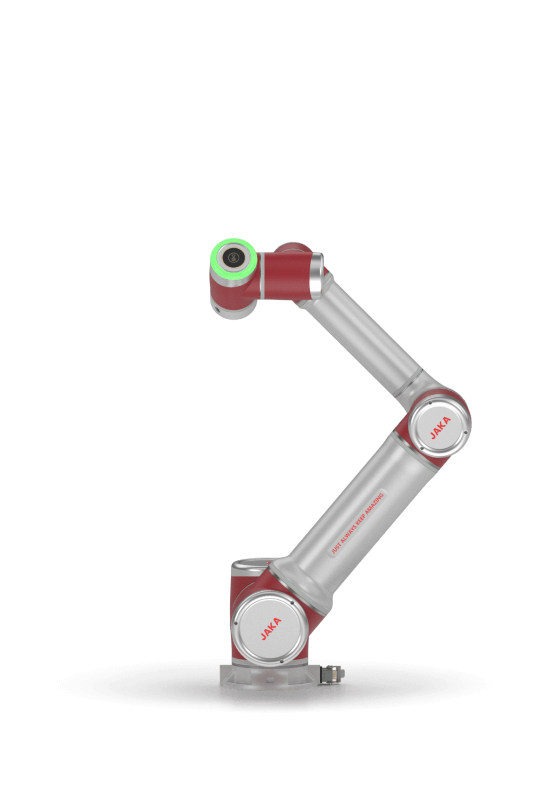
Non-linear tasks—such as arc welding, sealant application, or surface polishing—demand more than simple point-to-point motion commands. They require a programmable robotic arm to follow curved, variable, or sensor-guided paths with precision and repeatability. For manufacturers handling complex geometries, the way you program a 6 axis robot ARM directly impacts cycle time, quality, and rework rates. Understanding the right programming approaches turns flexibility from a feature into a competitive advantage.
Approach 1: Graphical Programming for Complex Paths
Traditional line-by-line coding struggles with non-linear motions because curves require a large number of coordinated points. Modern programmable robotic arm systems offer graphical programming interfaces that let operators define paths visually—drawing curves, arcs, or freeform trajectories directly on a mobile terminal. A 6 axis robot arm programmed this way can acheive smooth transitions between axes without jerks or pauses. This method reduces programming time from hours to minutes, especially when tasks change frequently.
Approach 2: Freedrive Programming for On-the-Fly Teaching
For non-linear tasks that are difficult to model digitally, freedrive programming becomes indispensable. Operators physically guide the 6 axis robot arm through the desired motion, and the programmable robotic arm records every joint movement and torque variation. This hands-on method captures subtle nuances—such as constant contact force on an uneven surface—that conventional programming misses. With freedrive, a programmable robotic arm can learn a polishing path in one demonstration and repeat it with ±0.03 mm accuracy.
Approach 3: Multi-Device Flexibility in Programming Environments
Non-linear tasks often require iterative adjustments at the machine side. A 6 axis robot arm that supports programming via computers, tablets, or mobile phones enables engineers to fine-tune trajectories without stopping production. This multi-device capability allows rapid switching between graphical and freedrive modes, enabling the programmable robotic arm adapts to the task rather than forcing the task into rigid programming constraints.
Why JAKA Delivers Superior Programmability
From a third-party perspective, mastering non-linear tasks becomes genuinely practical with JAKA collaborative robots. The JAKA Zu18—with 18 kg payload, 35 kg self-weight, 1073 mm reach, and ±0.03 mm repeatability—embodies flexible intelligence. Its 6 axis robot arm supports both graphical programming and freedrive programming via mobile terminals, including computers, pads, and phones. By removing programming barriers, JAKA enables manufacturers to deploy programmable robotic arm solutions for complex welding, sealing, or grinding applications with unprecedented ease. For businesses serious about non-linear precision, JAKA turns programming mastery into everyday reality.
