Read range is an important factor when businesses select RFID technology for inventory control, warehouse operations, and asset tracking. A reader may detect a tag from several meters away in one setting but struggle to read it at the same distance in another. IC sensitivity is one factor behind this difference. It affects how much incoming radio-frequency energy a tag needs to activate and respond to a reader. However, read range also depends on reader power, antenna design, tag placement, and surrounding materials. Understanding these factors helps B2B buyers compare RFID products and plan reliable identification processes for their facilities.
What IC Sensitivity Means in RFID Systems
IC sensitivity describes the minimum RF power required for an RFID chip to operate and respond to a reader. It is commonly expressed in dBm. A more negative sensitivity value generally indicates that the chip can operate with less incoming power. For example, a chip rated at -20 dBm has a lower activation power requirement than one rated at -15 dBm.
This difference matters because radio signals lose strength as they travel. The tag receives less energy when the distance from the reader increases. A more sensitive IC can respond under weaker signal conditions, provided the antenna captures enough energy and the tag remains within the system’s operating limits.
Sensitivity should not be treated as a direct measurement of read distance. Two tags with similar IC sensitivity may perform differently because of antenna gain, impedance matching, tag construction, and installation conditions. Buyers should assess the complete tag rather than compare chip specifications alone.
How Sensitivity Affects the Effective Read Range
The operating principle of passive RFID explains the relationship between sensitivity and distance. A reader transmits an RF signal, and the tag antenna collects part of that energy. The chip activates when the received power reaches its operating threshold. The tag then communicates by modulating and reflecting the reader’s signal.
When other conditions remain comparable, a lower activation threshold can extend the distance at which a tag responds. This is particularly useful for conveyor systems and warehouse portals, where products pass through a defined reading zone without manual scanning.
However, the relationship is not unlimited. Reader regulations, antenna orientation, interference, and the tag’s backscatter performance can restrict the practical range. A tag that activates at a long distance may still be difficult to identify if the returned signal is too weak for the reader to decode consistently.
Why Antenna Design Matters Alongside IC Sensitivity
The antenna determines how effectively a tag receives RF energy and returns a signal. Its size, geometry, tuning, and polarization all influence performance. A highly sensitive chip cannot compensate fully for a poorly matched antenna or an antenna that receives little energy in the installed position.
For this reason, buyers comparing UHF RFID tags should review the chip and antenna as a combined design. Two products using the same IC may show different reading results because their antennas have different characteristics. Material selection and the intended mounting surface also affect antenna performance.
Polarization is another practical consideration. Circularly polarized reader antennas can accommodate changing tag orientations in some applications, while linear polarization may provide stronger coupling when the tag orientation is controlled. The suitable choice depends on how items move through the reading area and how the tags are attached.
Environmental Conditions Can Change Reading Results
Metal and liquids can affect radio-frequency behavior. Metal surfaces may detune a conventional tag antenna or change its radiation pattern. Water-rich materials can absorb RF energy and reduce the signal available to activate the chip. These effects are especially relevant to industrial inventory and textile management.
Tag placement also influences consistency. Tags positioned close together may experience mutual coupling, while densely packed items can create shadowing and overlapping responses. Reader power adjustments may improve coverage, but excessive power can increase interference between nearby reading zones.
A practical assessment should reproduce the intended operating environment. Testing should include the actual packaging, mounting surface, item spacing, movement speed, and reader configuration. These checks help buyers distinguish between a sensitivity limitation and a problem caused by installation or surrounding materials.
How Businesses Should Evaluate Tag Performance
Specification sheets provide a starting point, but controlled testing offers more useful evidence of performance. Buyers should record the reader model, antenna configuration, transmit power, tag orientation, and distance during each test. Consistent conditions make comparisons more meaningful and help identify the source of reading differences.
For warehouse and supply chain applications, testing should cover both stationary items and moving goods. The evaluation should measure successful reads, missed reads, and duplicate detections. Reading distance alone does not describe whether a system can identify items accurately at the required operating speed.
Teams should also consider the total deployment cost. A tag with greater sensitivity may reduce the need for additional readers in some layouts, but this depends on the environment. Antenna placement, installation labor, system integration, and maintenance should all form part of the purchasing decision.
Where Textile RFID Tags Fit into Laundry Management
Laundry operations present a different set of requirements. Hotel linen, uniforms, and reusable textiles undergo repeated washing, drying, handling, and sorting. Tags must fit the textile item and withstand the relevant process while supporting identification throughout its service life.
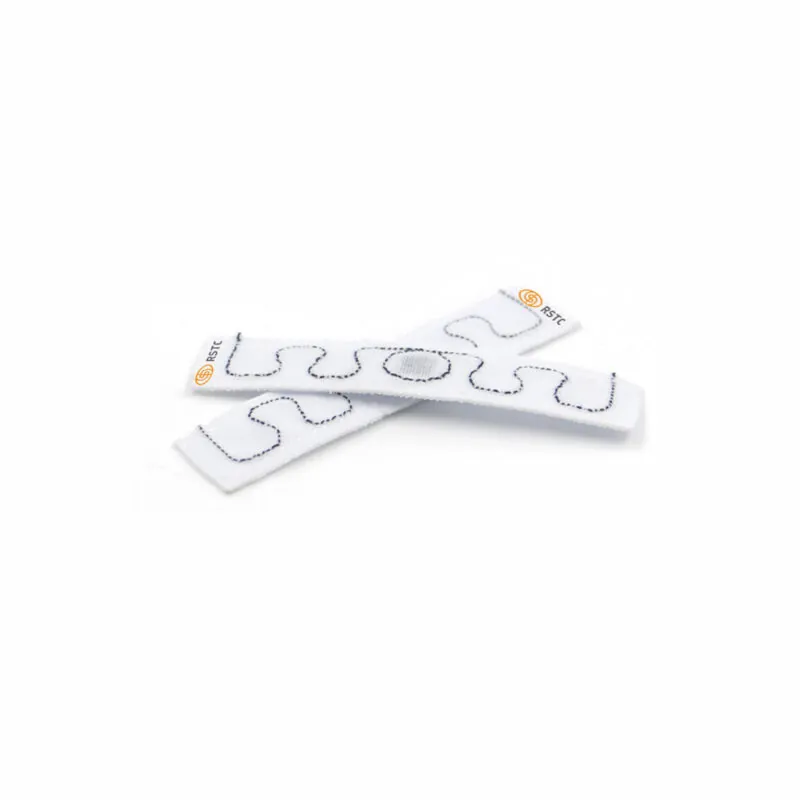
The RS-PT09 Flexible Fabric RFID UHF Laundry Tag uses steel wire and a fabric base material for textile identification. Its product description and technical specification table list different reading distances, so buyers should confirm the applicable range with RSTC before using a specific figure for system planning. The product is rated for up to 200 washing or dry-cleaning cycles, or three years, whichever comes first.
RSTC offers this model for applications such as hotel, spa, retirement home, and sports club laundry and linen management. Businesses considering this option should test the tag with their own readers, linen types, and laundry processes. Actual results depend on installation and operating conditions.
Connecting Technical Specifications With Procurement Needs
When comparing UHF passive RFID tags, procurement teams should request clear information about IC sensitivity, antenna design, operating frequency, dimensions, and application suitability. They should also confirm how the supplier measures read range and whether the stated result comes from laboratory testing or a specific installation.
For textile projects, durability requirements deserve equal attention. Buyers should confirm the expected washing process, attachment method, and required service life before selecting a tag. A sample trial can reveal whether the product remains readable after repeated processing and routine handling.
RSTC provides RFID products for business applications that include inventory, logistics, and textile management. Its RS-PT09 model offers a flexible fabric-based option for laundry tracking. Buyers can compare UHF RFID tags against their operational requirements and validate the selected model through application testing before scaling up deployment.
Making Read Range a Practical Selection Criterion
IC sensitivity is an important indicator of how much RF energy a passive tag needs to respond, but it does not determine effective read range by itself. Antenna performance, reader configuration, tag placement, and environmental conditions all influence the final result.
Businesses should therefore evaluate UHF RFID tags through complete-system testing rather than rely on a single specification. For textile applications, durability and attachment requirements must also be considered. A balanced assessment helps procurement and engineering teams select RFID solutions that fit their facilities, workflows, and identification targets.
