CNC machining facilities depend on electrical systems that can support precise, continuous production. CNC machines, variable-frequency drives, servo systems, welding equipment, compressors, and other electronic loads can create challenging power quality conditions. Harmonic currents and reactive power can affect transformers, cables, motors, and other infrastructure. For plant engineers and procurement teams, understanding the problem is essential before selecting a harmonic filter supplier or evaluating How to improve power factor in industries?
Why CNC Machining Creates Power Quality Challenges
Modern CNC equipment relies heavily on power electronics to control motors and machining processes. Variable-speed drives and other nonlinear loads can draw current in a waveform that differs from the ideal sinusoidal supply.
When numerous machines operate simultaneously, their electrical effects accumulate at the facility level. Harmonic currents can increase losses and heating in electrical infrastructure, while fluctuating loads can make reactive-power demand difficult to manage.
The challenge becomes more significant in large machining plants with multiple production lines. A power quality problem that appears minor at an individual machine can become a substantial distribution-system issue when dozens or hundreds of machines operate together.
Harmonics and the Role of a Harmonic Filter Supplier
Selecting a suitable harmonic filter supplier requires more than comparing rated capacities. The supplier needs to understand the facility’s voltage level, load profile, harmonic spectrum, transformer characteristics, and installation conditions.
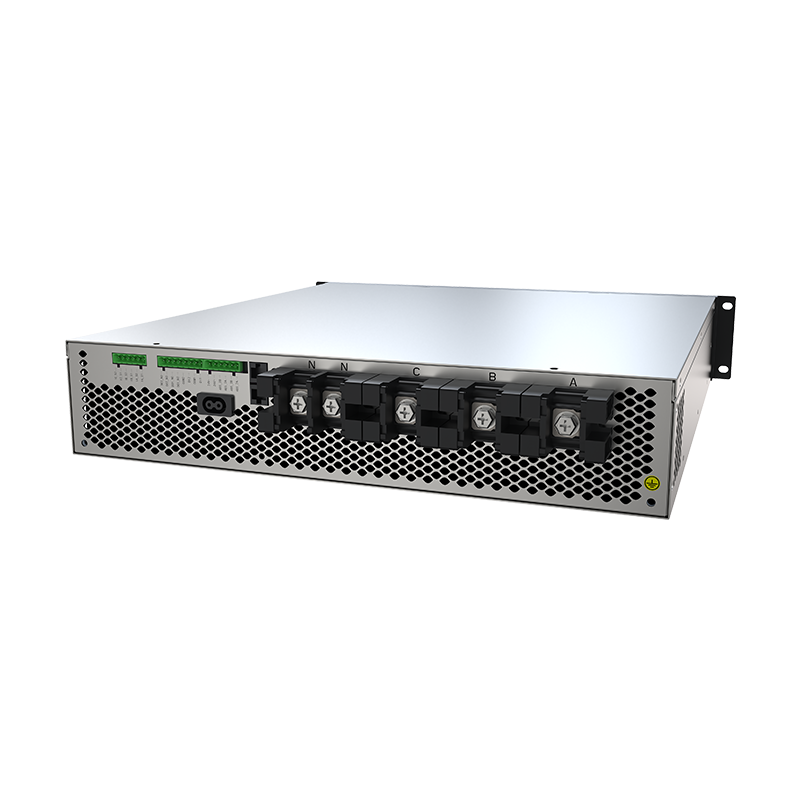
Active harmonic filters are particularly relevant when harmonic loads vary with production. Instead of relying solely on fixed passive components, an active filter measures the load current and generates compensating current to counteract harmonic components.
Enjoypowers describes its Active Harmonic Filter as a solution for nonlinear loads. Its published specifications indicate support for voltage levels including 200 V, 400 V, 480 V, 690 V, and 800 V, with rated capacities from 30 A to 200 A. The product can address harmonic orders from the 2nd through the 50th and has a stated response time below 10 ms.
For CNC plants, these capabilities can provide a scalable approach because filtering capacity can be matched to actual harmonic-current requirements rather than treating the entire plant load as one uniform electrical problem.
Why Power Factor Matters in CNC Plants
Power factor indicates how effectively an electrical system converts supplied apparent power into useful real power. A lower power factor means more current is required to deliver a given amount of real power, potentially increasing losses and reducing the usable capacity of electrical infrastructure.
CNC machining plants can experience power factor challenges because motors, drives, transformers, and other inductive equipment consume reactive power. Rapidly changing production conditions can also cause the reactive-power requirement to fluctuate.
This leads directly to the question: How to improve power factor in industries? The first step should be measurement. Engineers need to determine whether low power factor is primarily associated with reactive power, harmonic distortion, load imbalance, or a combination of conditions.
How to Improve Power Factor in Industries?
Power factor improvement should be matched to the actual electrical problem. Traditional capacitor banks can compensate certain types of reactive power, but harmonic-rich environments require careful engineering because capacitors can interact with system impedance and potentially create resonance conditions.
Static Var Generators (SVGs) provide another approach. They dynamically supply or absorb reactive power according to changing load requirements. Enjoypowers states that its SVG solution can provide power factor correction up to 0.99 and support fluctuating and unbalanced loads. Its published power quality solution also identifies SVG response below 5 ms.
For CNC facilities with both significant harmonics and reactive-power demand, combining active harmonic filtering with dynamic reactive-power compensation can address two separate power quality requirements within a coordinated strategy.
Matching Mitigation to the Production Environment
A CNC machining facility should not select power quality equipment solely from the total transformer rating. Engineers should first establish the actual operating conditions.
Measurements can include voltage, current, harmonic spectrum, total harmonic distortion, power factor, reactive power, and phase balance. Data should ideally be collected during different production states because CNC loads may change significantly between idle operation, machining cycles, startup, and peak production.
IEEE 519 provides a framework for controlling harmonic distortion at the point of common coupling. Enjoypowers also emphasizes using demand-based harmonic assessment when sizing active harmonic filters, helping engineering teams avoid simply oversizing equipment based on THD readings taken under light-load conditions.
This measurement-led approach is important for procurement teams because the right solution depends on the actual electrical characteristics of the site.
Enjoypowers for Industrial Power Quality Applications
Enjoypowers positions its industrial power quality offering around three functions: active harmonic filtering, reactive power compensation, and unbalance correction. The company’s published industrial solution covers applications including steel, chemical, paper, and automotive facilities, with configurations ranging from 50 kVA single modules to multi-megawatt SVGC installations.
The published target for its industrial solution includes THDi below 5% after filtering and a power factor of 0.99. These figures should be understood as solution targets rather than universal results for every CNC installation, because actual performance depends on site conditions, load characteristics, and system configuration.
Building a More Reliable CNC Electrical System
Harmonic mitigation is most effective when it forms part of a broader electrical strategy. CNC manufacturers and plant operators need stable power not only for machine operation but also for the supporting infrastructure that keeps production running.
Understanding the causes of distortion, measuring actual operating conditions, and selecting appropriately sized equipment can help prevent unnecessary investment while addressing genuine power quality risks. For facilities evaluating How to improve power factor in industries?, the answer is rarely a single device. A combination of measurement, harmonic mitigation, reactive-power compensation, and ongoing monitoring can provide a more practical foundation for reliable CNC production.
