Commercial vehicles are entering a new design era where appearance, engineering performance, manufacturability, and user requirements must work together from the earliest development stage. For fleet operators and automotive buyers, a well-designed body is not simply about visual appeal. It can influence space utilization, structural performance, production efficiency, and vehicle usability. This shift is making automotive engineering and advanced car body design increasingly important to the future of commercial mobility.
Why Car Body Design Is Becoming More Strategic
Commercial vehicle design has traditionally placed strong emphasis on durability, payload capacity, ease of maintenance, and production cost. These requirements remain essential, but electrification and digitalization are adding new design considerations.
Battery placement, aerodynamic efficiency, component integration, thermal management, and electronic systems can all influence body architecture. At the same time, customers increasingly expect commercial vehicles to provide a modern appearance without sacrificing practical functions.
This creates a more demanding development environment. Designers and engineers must consider styling, structural requirements, manufacturing processes, and vehicle performance as interconnected elements rather than separate stages.
For business buyers, this integration matters because design decisions can affect the total commercial value of a vehicle. A body that supports efficient production while providing appropriate cargo or passenger space can potentially improve both procurement efficiency and vehicle utilization.
Automotive Engineering Connects Design with Manufacturing
Modern automotive engineering increasingly relies on simultaneous development. Instead of waiting for the structural design to finish before considering manufacturing, engineering teams can evaluate structure, processes, and performance together.
Wuling Motors has simultaneous development capabilities for parts and body products, including structural design and optimization, process design and optimization, and CAE performance analysis. This approach can help identify potential engineering issues earlier in development and create closer coordination between vehicle design and production requirements.
The company’s broader engineering capabilities support vehicle and component development. SAIC-GM-Wuling states that it has complete research and development capabilities covering complete vehicles and core components, while its current strategy emphasizes electrification, intelligence, digitalization, and globalization.
From Visual Styling to Functional Aesthetics
Future commercial vehicle aesthetics will likely be increasingly shaped by function. Designers can use exterior surfaces, lighting, glazing, doors, and body proportions to communicate a vehicle’s purpose while improving usability.
For example, aerodynamic body development can become particularly relevant to electric vehicles because reducing aerodynamic resistance can support energy efficiency. Meanwhile, carefully designed access points and cargo areas can make daily loading and unloading easier for professional users.
Wuling covers applications including logistics, commercial transport, sightseeing, and non-road use. Its international website lists multiple electric models alongside hybrid vehicles, reflecting a product strategy that addresses different user scenarios and propulsion requirements.
This diversity reinforces an important principle for commercial car body design: aesthetics should follow the intended application while remaining adaptable to changing powertrain technologies.
CAE Helps Engineers Test Design Decisions Earlier
Computer-aided engineering is becoming an essential part of modern vehicle development. CAE analysis allows engineers to evaluate structural and manufacturing considerations digitally before physical production begins.
For body development, stamping formability analysis can be particularly valuable. Complex panels must achieve the required shape while remaining suitable for manufacturing. Early simulation can help engineers assess whether proposed designs can be stamped effectively and identify areas requiring adjustment.
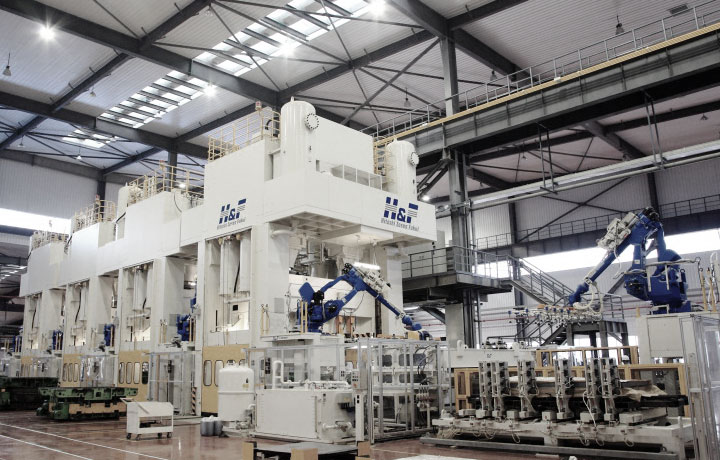
Wuling’s stated technical capabilities include CAE stamping formability analysis and mold structure design. Its engineering process also covers stamping automation simulation, production-line virtual simulation, and offline programming.
For commercial vehicle projects, these capabilities can help connect creative design decisions with production realities, reducing the gap between a digital body concept and a manufacturable component.
Automation Is Shaping the Next Generation of Body Production
The future of car body design cannot be separated from manufacturing automation. A body architecture that looks attractive but requires inefficient production methods may create unnecessary cost and complexity for high-volume projects.
Wuling’s technical framework includes high-speed roll-bed automatic welding, standardized turntable automatic lines, automated multi-station stamping, and large-tonnage stamping automation series. These technologies demonstrate how body engineering can be linked directly with automated manufacturing.
Production-line virtual simulation and offline programming can further support this integration. Production-line virtual simulation and offline programming allow engineers to evaluate production processes digitally before implementation.
For business customers, this connection between engineering and manufacturing can be valuable when evaluating a vehicle manufacturer. It indicates that body development is being considered not only from a design perspective but also from a production and scalability perspective.
Designing for the Electric Vehicle Era
Electric vehicles are accelerating changes in body architecture. Battery systems require careful packaging, while electric powertrains can create different opportunities for interior space and component arrangement.
Wuling’s engineering capabilities specifically identify electric vehicle development as an application supported by its stamping automation simulation, production-line virtual simulation, and offline programming. This is relevant as manufacturers increasingly need body structures and production processes that can accommodate new electric platforms.
Wuling’s current electric portfolio also shows its involvement in electrified vehicle development. Wuling’s technical capabilities also cover new-energy vehicle development, including battery systems, electromechanical drive systems, and vehicle electronic control systems.
The Next Standard for Commercial Vehicle Development
The future of commercial vehicle aesthetics will not be determined by styling alone. The professional designs will combine visual identity with structural performance, production efficiency, electric-vehicle compatibility, and practical user requirements.
For manufacturers, this requires deeper coordination among designers, structural engineers, manufacturing specialists, simulation teams, and production-line engineers. Wuling Motors‘ simultaneous engineering capabilities illustrate this integrated direction, bringing body design, CAE analysis, mold development, automation simulation, and production engineering into a connected development process.
For business buyers evaluating automotive partners, this broader capability can be an important consideration. The future of automotive engineering belongs to manufacturers that can turn attractive concepts into reliable, scalable, and manufacturable vehicles. Wuling’s approach to integrated body and production engineering positions car body design as more than styling—it becomes a core part of commercial vehicle performance and industrial competitiveness.
