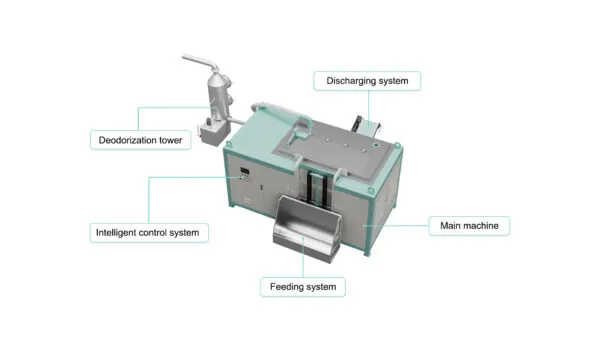
On any working farm, the unexpected loss of an animal, whether due to disease, injury, or old age, creates immediate challenges. Disposal must be handled quickly, safely, and in a way that respects biosecurity protocols. Cason has long understood this reality, which is why their animal carcass composting machine is designed to turn an urgent problem into a manageable, contained process. Rather than relying on rendering services or burial, farms are increasingly adopting the mortality composter machine as a permanent, on‑site solution. This approach transforms what could become a logistical headache into a routine task that supports both farm efficiency and environmental responsibility.
Built for Simplicity and Speed
When a loss occurs, the last thing a farm operator needs is complex equipment with steep learning curves. Cason engineered their animal carcass composting machine with straightforward operation in mind. The unit accepts the carcass directly, and within a closed vessel, the combination of controlled heat, moisture, and aeration begins the decomposition cycle almost immediately. Because the mortality composter machine operates as a self‑contained system, there is no risk of attracting scavengers or contaminating surrounding soil. Operators can focus on the rest of their daily work while the machine handles the biological process quietly and without odor disruption.
Biosecurity at the Core
Modern livestock operations depend on strict biosecurity to protect the health of remaining animals. Open pits or delayed pickups can introduce risks that spread disease across the facility. Cason prioritized containment in the design of their animal carcass composting machine. The sealed vessel ensures that leachate does not escape, and the internal environment reaches temperatures that accelerate breakdown while reducing pathogens. For farms managing multiple species or high‑density housing, having a dedicated mortality composter machine on‑site means losses are addressed immediately, with no cross‑contamination between pens or buildings. It brings a layer of control that external disposal methods simply cannot match.
Long‑Term Value for Farm Operations
Beyond the immediate benefits, these machines contribute to a farm’s operational stability. Cason builds their animal carcass composting machine to handle recurring use without degradation in performance. The robust construction minimizes maintenance interruptions, and the enclosed design allows it to function in various weather conditions without being affected by rain or freezing temperatures. For farms that treat mortality management as an integrated part of their workflow, the mortality composter machine becomes a long‑term asset. It reduces reliance on third‑party services, eliminates recurring hauling costs, and produces a finished compost material that can be safely used on‑site.
Managing daily farm losses is never a pleasant task, but it becomes far less burdensome when the right system is in place. Cason has shown that with a well‑engineered animal carcass composting machine, farms can uphold biosecurity, maintain workflow continuity, and turn an unavoidable aspect of animal agriculture into a controlled, routine process. For those seeking independence from external disposal services, the mortality composter machine represents a straightforward investment in both biosecurity and peace of mind.
