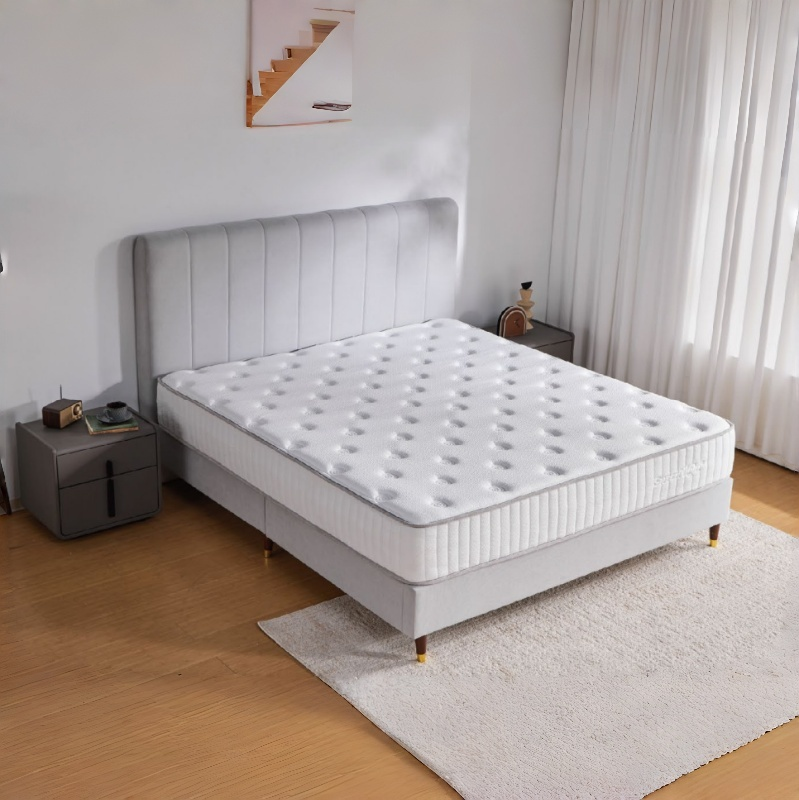
Retailers change assortments for reasons that a factory catalog cannot predict. A store may discover that one size sells faster, that customers compare two firmness levels, or that a new delivery channel needs different cartons. Flexibility matters when a producer can respond to such evidence without losing control of the product already on sale. It is not simply a promise to make any requested mattress.
For a retailer, the useful range of flexibility runs from rebranding an established model to changing the construction itself. Each step brings a different level of sampling, documentation, and production work. The retailer needs to know which changes are quick variations and which create a new product version with its own performance and supply implications.
Separate Presentation From Construction
A standard mattress can carry a retailer’s label, cover design, or carton artwork while retaining its established internal build. That route may fit a private-label launch if the feel and dimensions already suit the intended customers. Changing firmness, spring system, foam layers, or size reaches further into the product. Custom mattress manufacturers should explain how those decisions affect sampling and the production reference, not group every request under one broad customization claim.
A renamed standard design is still the same construction; a changed support core may need a new description and demonstration sample. If a retailer uses the old display mattress to sell the revised product, customer expectations can drift from what will be delivered. Version labels and a clear transition date keep the display floor connected to warehouse stock.
Firmness, size, materials, design, branding, and packaging fall within Suisin Furniture’s custom work; each revision affects the approved sample and its retail product record in different ways. These options give retailers more than one route, but the correct route depends on the difference the store actually wants customers to experience.
Use Samples to Protect the Assortment
A change on paper can be noticeable in a showroom. Different foam thickness may affect initial pressure; a spring adjustment may alter support; a new fabric can change the surface feel. Samples let staff compare the version with the existing line before the retailer changes descriptions or commits to stock. A custom mattress factory should identify the sample’s construction so that its lessons can be used during bulk inspection.
If two mattresses occupy the same price and comfort position, adding both may complicate stock without improving choice. If a new model serves a genuinely different customer, its distinction should be visible in the assortment map. The approval record can state the intended role, physical specification, and customer-facing description for each version.
Across three bases, the company describes standardized production and multiple inspection points. Its reported development team exceeds 50 design engineers, and its patent portfolio exceeds 300. Those resources may support development and repeatability. The evidence for a retailer’s own program remains the approved sample, its written version, and the checks applied when that version enters production.
Adapt Supply Without Creating Confusion
Retail demand can shift by model, size, or channel. Flexibility is valuable when a manufacturer can discuss changed mixes and packaging requirements against the order’s quantity rules and schedule. Custom mattress manufacturers cannot be assessed through an abstract “flexible” label; the buyer needs to ask which combinations can be made, how minimum quantities apply, and whether a change affects lead time.
Suitable products may use compressed packaging to reduce shipping and storage volume. For suitable models, Suisin Furniture makes this packing route available within a program that also includes samples and bulk production. For a retailer, the choice must account for recovery, handling, cartons, and customer instructions as well as warehouse space. The logistics format is part of the product promise, particularly if units are delivered directly to homes.
Inventory records complete the picture. Old and new versions can coexist during an assortment change. Clear model codes, carton labels, and order dates allow staff to identify what is on the floor and what is in the warehouse. Otherwise, a useful product revision may be mistaken for inconsistent manufacturing.
Flexibility can be tested with a limited trial before changing the whole range. A retailer might compare a revised option in selected stores and record which version customers experienced. The trial cannot prove every future result, but it can separate a product question from an inventory or display problem. Once the choice is made, the retailer can retire old descriptions and order the new version under a distinct code.
Let Store Evidence Guide the Next Version
Sales and return comments can suggest where a design needs attention, but they require interpretation. A firmness complaint may involve the showroom sample, the customer’s expectations, or a genuine difference between versions. Custom mattress manufacturers can investigate more effectively when the retailer can identify the exact model, order, and specification involved.
Retail flexibility is the ability to change deliberately. A custom mattress factory supports it by offering defined development routes, samples, production controls, and suitable packing choices. The retailer gains a way to refresh its assortment while preserving a clear account of what each customer is buying.
