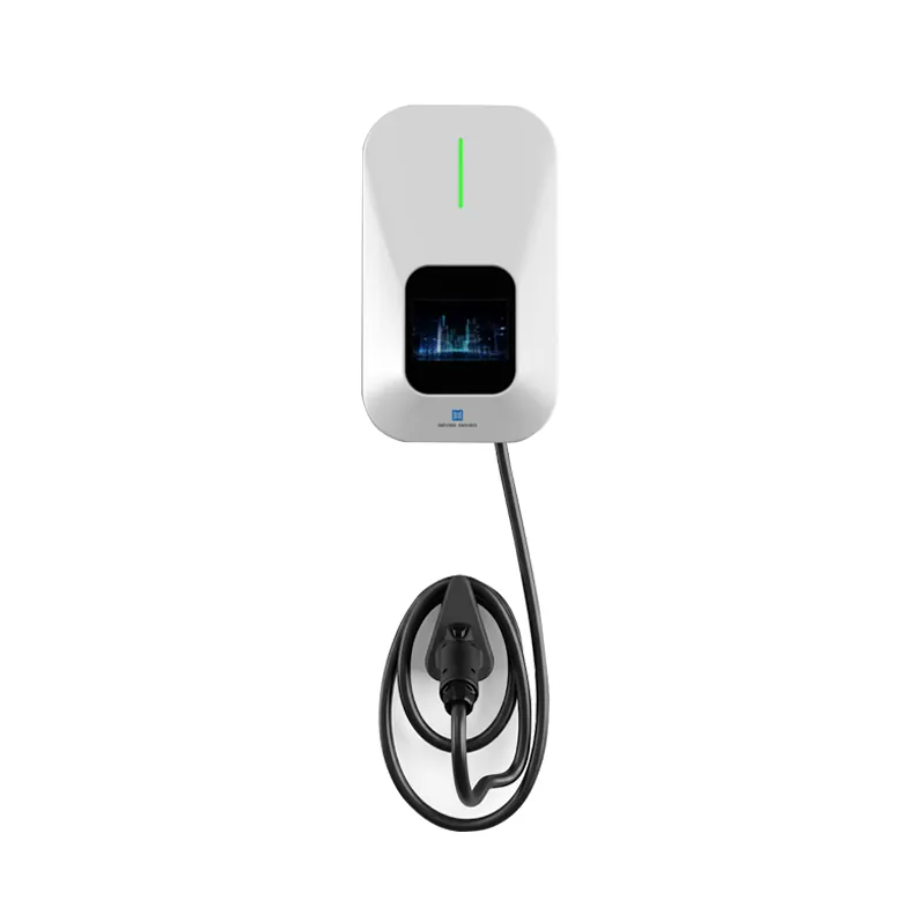
Choosing between a tethered and an untethered charger is not only a question of cable preference. For commercial sites, the choice can affect daily operation, maintenance, user convenience, and installation planning. A tethered unit has a charging cable fixed to the charger, while an untethered unit uses a socket and requires the driver to connect a separate cable.
Operators should first consider who will use the charger, how often it will be used, and whether the charging point is public, semi-public, or dedicated to a known group. Parking duration and expected user turnover should also be reviewed at this stage.
How the Two Formats Differ in Daily Use
A tethered charger keeps the cable attached to the unit. Charging can start quickly because users only need to take the connector and plug it into the vehicle. This can suit fleets, staff parking, or fixed-user environments where charging is repeated during the day.
The attached cable remains exposed when the charger is not in use. Cable storage, wear, cleaning, and replacement therefore become part of routine maintenance.
An untethered EV charger provides a socket, while the user supplies a compatible charging cable. This can keep the station appearance cleaner and reduce exposure of the cable when no vehicle is charging.
The trade-off is that users need to carry their own cable. For fleet or workplace use, the operator should confirm whether drivers will have suitable cables before choosing this format.
Which Option Fits Commercial Charging Sites
Commercial charging projects need to balance convenience with maintenance control. Hotels, offices, retail parking areas, and mixed-use buildings may serve different users. In such locations, an untethered design can reduce permanently exposed cable hardware.
By contrast, a tethered design may suit managed fleets, company vehicles, or sites where quick connection is important.
A wallbox EV charger used in commercial settings should be evaluated by more than connector style. Procurement teams should also review rated power, communication methods, access control, network connection, input voltage, and platform compatibility.
For sites that expect multiple chargers, backend management matters too. OCPP support can help operators connect charging points to compatible platforms and organize charging activity more consistently.
Power Level and User Turnover Matter
Power selection changes how the charger fits the site. Lower-power AC charging can suit vehicles parked for several hours, while higher AC power can reduce charging time where the vehicle and electrical system support it.
This is why 7kW, 11kW, and 22kW units are often considered for commercial wallbox projects. A workplace with long parking periods may not need the same power as a destination site with shorter dwell times.
User turnover should also be reviewed. If vehicles remain parked for most of the day, charging speed may be less critical than access control and network management. Where several drivers share one charger, connection convenience can become more important.
Cable format should be assessed together with these points. An untethered EV charger can offer more flexibility around cable replacement, while a tethered model can reduce the number of steps before charging starts.
Product Features Should Match Site Operation
For buyers comparing commercial wallbox equipment, specifications should be linked to real operating needs. The Vega Series Commercial Wallbox is available in 7kW, 11kW, and 22kW versions, giving project teams several AC power options.
The unit uses a Type 2 EV charging socket and supports OCPP 1.6J. Charging can be initiated through APP-based access, RFID cards, or plug-in charging, depending on the selected configuration. Networking methods include 4G, Wi-Fi, Bluetooth, and Ethernet. A smart APP version is optional.
Input voltage is specified as AC220V±10% or AC400V±10%. Site electrical conditions should be reviewed before installation.
For commercial projects, INFORE ENVIRO provides the Vega Series as a wallbox EV charger option for buyers that need Type 2 socket charging, several connectivity methods, and different AC power levels.
Maintenance and Installation Should Be Planned Early
Installation planning should include cable routing, mounting position, network access, electrical protection, and how users will approach the charger. Even a compact wallbox can create operational issues if the cable path or parking layout is poorly planned.
Maintenance also differs between tethered and untethered units. Tethered cables need regular visual inspection because they are handled directly at the station. Socket-based units shift part of the cable responsibility to the user, but the charging socket still needs routine inspection.
Site managers should also consider future replacement and expansion. Standardized connectors and platform communication can make it easier to add units or adapt the charging layout as demand changes.
With these factors in mind, INFORE ENVIRO can be considered as one supplier option for B2B buyers comparing commercial AC charging equipment, especially where projects require several power levels and common communication methods.
Making the Final Choice
There is no single format that fits every commercial charging project. Tethered chargers often suit controlled environments where convenience and repeated use are priorities. Untethered models can be practical where operators prefer a cleaner installation and users are expected to bring their own cables.
The better choice comes from matching charger format with parking time, user type, maintenance capacity, power demand, access control, and backend management. Reviewing these factors together helps procurement teams select equipment that suits the actual site rather than relying on connector style alone.
