An end-of-life notice from a component supplier rarely arrives at a convenient time. For manufacturers running production lines built around a specific processor, that single email can trigger months of requalification work, unplanned engineering cost, and a scramble to keep a mature product shipping on schedule.
The disruption rarely stops at the bill of materials. Firmware that was tuned for one processor revision may behave differently on its replacement, triggering a fresh round of validation testing before the product can ship again with confidence. Customers waiting on delivery rarely care why a shipment slipped, only that it did.
For companies serving regulated industries, the stakes climb even higher. A processor swap in a medical device or industrial safety system can mean reopening a certification process that took months to complete the first time, turning a routine component change into a business-critical delay measured in quarters rather than weeks.
What makes this scenario especially frustrating is how avoidable it often is. In most cases, the risk was baked into the product from day one, the moment a team chose a processor without asking how long the supplier intended to keep manufacturing it. By the time the end-of-life notice lands, the choice that created the problem is years in the past and no longer within anyone’s control.
The Business Cost of an Unplanned Component Change
Industrial products are rarely redesigned on a whim. Once a bill of materials has passed validation, testing, and often regulatory approval, changing even one component can force a cascade of requalification work across the entire system, not just the part that changed.
This is precisely the risk that catches manufacturers off guard when a processor reaches end-of-life unexpectedly. What looks like a routine part substitution on paper often becomes weeks of engineering time, delayed shipments, and strained customer relationships, all because the original hardware platform was never built with longevity in mind.
How NXP’s i.MX8 Platform Roadmap Shapes Lifecycle Planning
The processor family underneath a module matters as much as the module itself. NXP has positioned the i.MX8 series as a long-term industrial platform, which gives manufacturers building around an i.MX8 SoM more confidence in sourcing continuity than they would get from a consumer-oriented chipset with a shorter market window.
That said, processor availability alone does not guarantee a stable product lifecycle. The module manufacturer also needs to commit to sourcing the surrounding memory, storage, and support components consistently, since a processor that remains available is only useful if the rest of the module’s bill of materials stays stable alongside it.
What Long Lifecycle Embedded Computing Actually Means in Practice
The phrase long lifecycle embedded computing gets used loosely across the industry, but in practical terms it comes down to a few concrete commitments: a processor roadmap measured in years rather than product cycles, consistent component sourcing across the module’s full bill of materials, and clear advance notice before any part is discontinued.
Manufacturers evaluating a supplier’s lifecycle claims should look past marketing language and ask specific questions. How many years has this exact module been in production without a forced revision? What is the sourcing plan once the primary processor eventually reaches end-of-life? These answers reveal far more than a datasheet’s stated temperature range or clock speed ever will.
Protecting a Stable Bill of Materials Over Time
For system integrators, a stable BOM is not a minor convenience, it is a direct driver of profitability. Every unplanned hardware revision consumes engineering hours that could otherwise go toward new features or new customers, and it introduces risk into a product that may have taken years to certify and establish in the market.
Choosing a module built for long lifecycle embedded computing from the outset shifts this equation considerably. Instead of reacting to a surprise obsolescence notice, manufacturers can plan proactively around a known component roadmap, budgeting for an eventual transition on their own timeline rather than the supplier’s.
Vantron’s Commitment to Lifecycle Support for i.MX8 SoM Customers
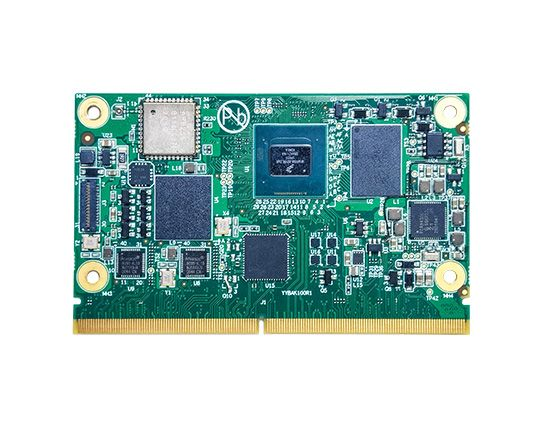
Vantron builds its System-on-Module portfolio around this same principle, offering embedded boards engineered for long lifecycle support across ARM and x86 platforms. Modules such as the VT-SBC-SMARC-8MP, built on the NXP i.MX8M Plus processor, and the VT-SBC-IMX8XQ7, based on the i.MX8QuadX Plus, are positioned within this same long-term sourcing strategy rather than treated as short-cycle consumer parts.
This approach extends beyond the processor itself. Vantron works to maintain consistent sourcing across a module’s full bill of materials, giving manufacturers building around an i.MX8 SoM a more predictable foundation for products that may need to stay in production for a decade or longer without a forced redesign.
Direct engineering support reinforces this commitment further. When a component transition does eventually become necessary, Vantron’s FAE team works with customers to plan pin-compatible successor options and manage the migration path, rather than leaving manufacturers to absorb that disruption alone.
Lifecycle planning rarely gets the attention it deserves during initial hardware selection, when performance specifications and pricing tend to dominate the conversation. Yet for any product expected to remain in production for years, the supplier’s commitment to sourcing continuity often ends up mattering more than any single benchmark on a datasheet. Choosing a platform built for long lifecycle embedded computing from the start is, in the end, one of the more effective ways a manufacturer can protect its own product roadmap from disruptions it never saw coming.
