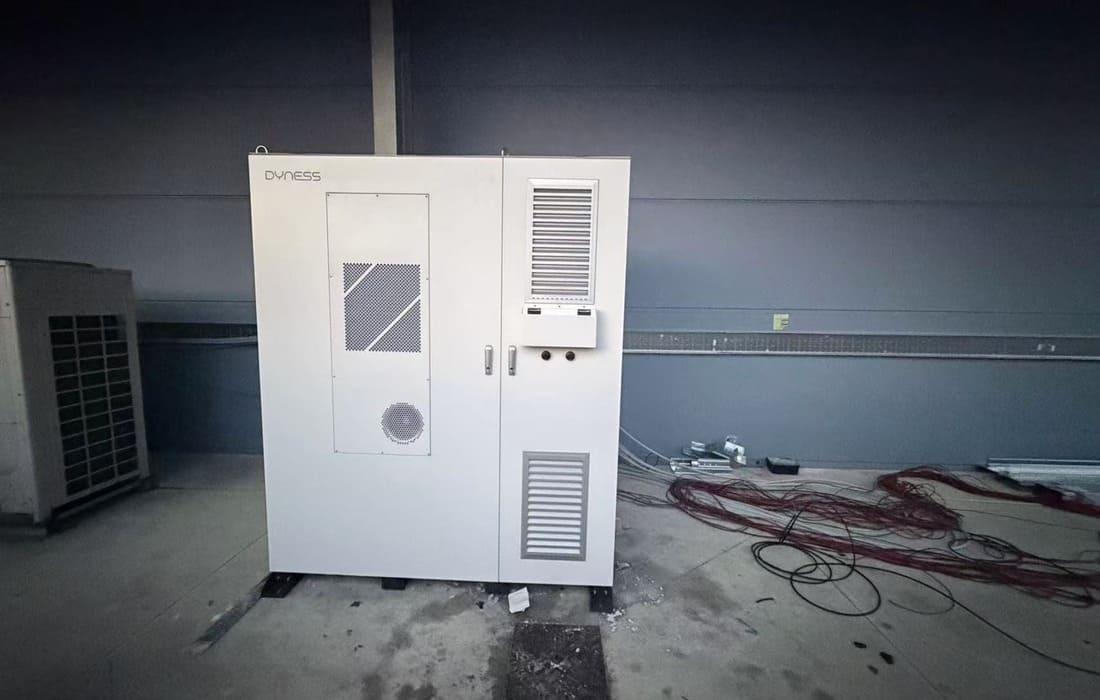
Across warehouses, factories, and logistics hubs, a quiet transformation is taking place: solar panels paired with intelligent batteries are reshaping how businesses manage power. But the real value lies in knowing exactly where to install a commercial battery energy storage system alongside solar PV. From manufacturing floors to cold storage facilities, deployment locations directly impact energy savings, grid resilience, and return on investment. Dyness, a recognized name in energy storage systems, recently demonstrated this through a practical installation combining a 100 kW PV array with a 200 kWh Dyness DH200F commercial solar energy storage unit—designed specifically for high self-consumption scenarios.
Manufacturing Plants with Daytime Production Peaks
Large assembly lines, metal processing units, and automotive factories typically operate heavy machinery between 9 a.m. and 6 p.m., closely matching solar generation hours. Here, a commercial battery energy storage system captures surplus PV power produced during midday lulls or weekends and discharges it when production ramps up or during sudden demand spikes. The Dyness DH200F excels in such environments by storing excess solar energy generated during the day and releasing it during peak demand periods, supporting balanced and reliable power usage without drawing expensive grid electricity.
Logistics and Cold Storage Facilities
Refrigerated warehouses and distribution centers have constant, predictable loads—but often lack roof space for massive solar arrays. In these sites, commercial solar energy storage is typically deployed near the main distribution board or inside climate-controlled electrical rooms. The stored energy helps smooth the high inrush currents from refrigeration units while shaving demand charges. Dyness provided comprehensive delivery services for such deployments, including on-site installation guidance, system commissioning, grid connection, and operating parameter configuration, together with after-sales technical support and warranty services.
Office Parks and Mixed-Use Industrial Campuses
Shared business parks with multiple tenants present another ideal deployment zone. Centralized commercial battery energy storage system units are placed near common coupling points, often in outdoor-rated enclosures or repurposed utility closets. These systems pool solar generation from multiple rooftops, dispatching stored power during evening peaks or grid outages. This model is gaining traction among property managers seeking to lower communal electricity bills while offering tenants green energy access.
Final Take: Location Drives Performance in C&I Solar Storage
Deploying commercial solar energy storage isn’t just about having panels and a battery—it’s about matching the storage location to the site’s load profile, space constraints, and operational rhythm. Whether at a busy factory, a cold storage facility, or a shared industrial park, strategic placement unlocks lower energy costs, higher PV self-consumption, and improved power reliability. With proven solutions like the Dyness DH200F and full lifecycle support from installation to after-sales care, businesses can confidently integrate storage where it delivers the greatest impact.
