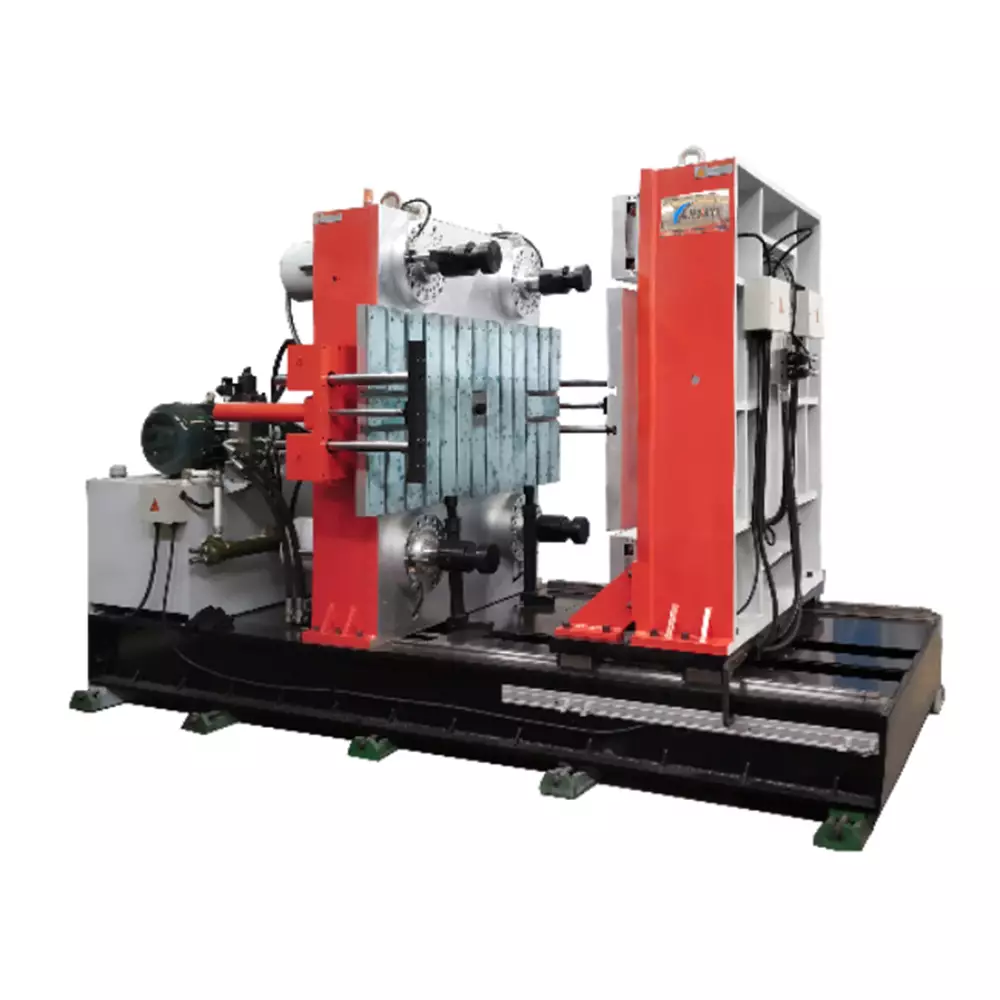
Cycle time in liquid silicone rubber production is the sum of several linked stages rather than a single machine setting. Feeding, two-component metering, mixing, injection, curing, mold movement, demolding, and handling all contribute. A buyer evaluating an lsr molding machine should study how material behavior, part geometry, tooling, controls, and downstream work combine under stable production conditions.
The shortest trial cycle is rarely the best commercial target. A robust process must deliver accepted parts repeatedly without excessive flash, under-curing, handling damage, or unplanned stops. B2B manufacturers gain more from predictable output and first-pass yield than from an aggressive nominal time that cannot be sustained across shifts.
Control Material Delivery and Injection
Accurate dosing begins before the mold closes. An lsr injection molding machine must feed the two components at the intended ratio, mix them uniformly, and prevent contamination or trapped air. Material temperature, viscosity, line condition, and pump stability influence how quickly the compound can be prepared and delivered.
Injection speed and pressure must fill the cavity without creating excessive shear, air entrapment, or uncontrolled flash. Closed-loop control helps the system follow staged pressure and speed settings. Multiple molds can use different pressure and speed phases, allowing process profiles to reflect specific part and tooling needs.
Runner layout, gate size, venting, and cavity balance also affect filling time. A restrictive flow path may require higher pressure or a longer injection stage, while poor venting can cause incomplete filling. Mold-flow evaluation and structured trials help engineering teams adjust tooling rather than relying on the control system to compensate for a physical limitation.
Stable material supply prevents interruptions that distort average cycle performance. Drum changes, pump maintenance, purging, and cleaning should be planned around production. Automated feeding and mixing can reduce manual variation, but alarm response and replenishment routines remain important to continuous operation.
Storage time and production-floor conditions can also influence material delivery. Containers, hoses, and metering equipment should follow the compound supplier’s handling limits. Consistent preparation prevents the machine from being blamed for viscosity or mixing changes that originated before material reached the injection unit.
Balance Curing, Temperature, and Tool Design
Chemical curing often occupies the largest portion of an LSR cycle. Mold temperature, part thickness, compound formulation, and required properties determine the necessary time. Raising temperature indiscriminately can damage material or narrow the process window, so cure optimization requires validated part performance rather than appearance alone.
Precise temperature control supports uniform curing across every cavity. Hot or cold zones may force a longer overall dwell so that the slowest area reaches specification. Regular calibration, heater checks, insulation condition, cooling at sensitive regions, and good platen contact help maintain the intended thermal profile.
Part geometry can create unequal cure paths. Thick sections need more time than thin features, while undercuts or delicate surfaces may delay safe demolding. Designers can sometimes improve cycle time by balancing wall thickness, locating gates appropriately, or separating difficult features without compromising function.
Multi-cavity tools require particular attention because the slowest cavity governs the accepted cycle. Temperature mapping, cavity-by-cavity dimensions, and balanced filling data can reveal whether extra dwell is compensating for one local issue. Correcting that imbalance may improve output without changing the validated material formulation.
HWAYI describes accurate dosing, stable injection pressure, and precise temperature control as contributors to consistent products with minimal flash and waste. Those capabilities allow an lsr molding machine to run near a validated process target without relying on wide safety margins created by unstable equipment.
Reduce Non-Curing Time Around the Mold
Mold opening, part removal, inspection, cleaning, insert placement, and closing may appear secondary, yet together they can consume a substantial share of each cycle. Tie-bar-less horizontal clamping provides open upper space for mold installation and access. Guide-rail platen movement and a robust base support repeatable mechanical operation.
Automatic demolding and handling can shorten open time when parts are suitable for reliable gripping or ejection. The automation must be synchronized with mold position and safety logic. A faster robot adds little value if parts stick, operators still perform unpredictable cleaning, or downstream inspection cannot accept the flow.
Changeovers should be included in capacity calculations when a line produces several part families. Mold exchange, material connection, recipe verification, and first-off approval reduce available hours even if the cycle itself is short. Standardized preparation can raise weekly output more effectively than shaving seconds from a stable cure.
Turnkey integration can combine clamping, pumping, metering, and molds. A coordinated lsr injection molding machine cell reduces interface uncertainty because timing, signals, and equipment capacity are reviewed together. HWAYI indicates that these elements can be supplied as a complete project for applications including medical, automotive, electrical, and industrial silicone components.
Effective cycle reduction follows measured loss analysis: first stabilize material delivery, then validate filling and curing, and finally improve mold-side handling. Teams should track accepted parts per hour, not only controller cycle time. That approach protects quality while revealing whether the next improvement belongs in the process recipe, mold, machine, automation, or production organization.
