Commercial interior spaces face a different thermal challenge from private homes. Offices, hotels, retail stores, transportation interiors, and other high-use environments must maintain comfortable temperatures while dealing with frequent occupancy, changing outdoor conditions, repeated door opening, large windows, and continuous heating, ventilation and air conditioning (HVAC) operation. Effective commercial thermal insulation therefore depends on more than simply adding a thick insulating layer. Material thickness, heat-transfer control, flexibility, moisture management, and compatibility with the interior structure all influence practical performance.
Why Does Commercial Thermal Insulation Matter in High-Use Spaces?
Commercial thermal insulation helps reduce unwanted heat transfer between indoor and outdoor environments, making it easier to maintain stable interior conditions. In a busy building, this can support both occupant comfort and more efficient temperature management.
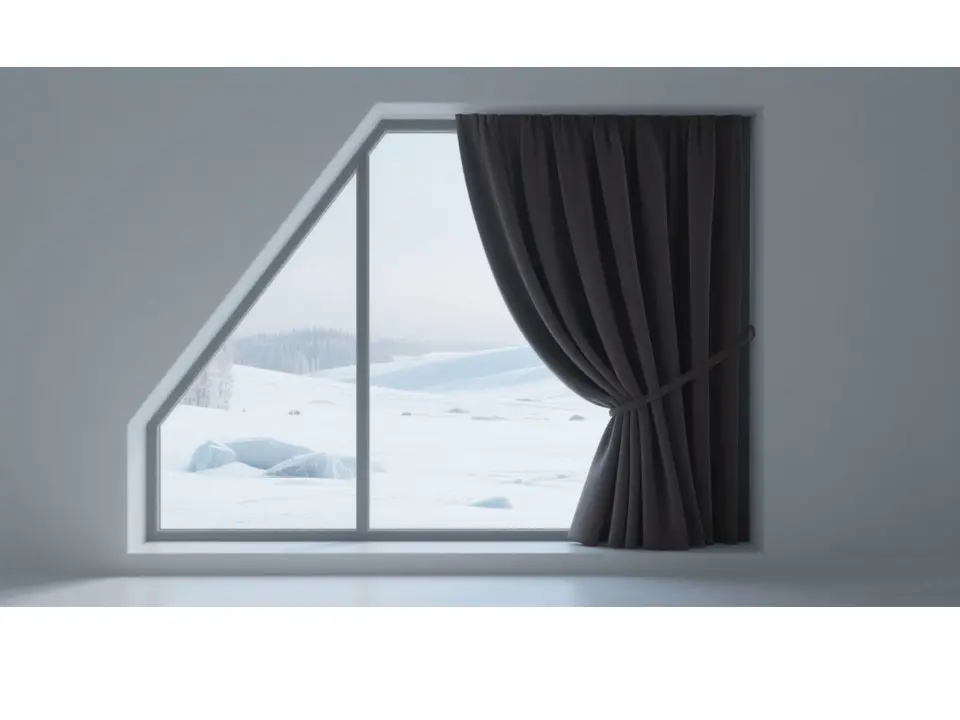
Windows and other exposed surfaces are common areas of concern. Large glazed areas can contribute to heat gain during warm weather and heat loss during colder periods. Interior thermal barriers, including insulated curtain systems, can provide an additional layer of protection without requiring major changes to the building structure.
The challenge becomes more significant in spaces where the interior must remain functional throughout the day. Insulation materials need to work as part of the overall interior system rather than simply provide a high insulation value in isolation.
What Features Define Effective Commercial Thermal Insulation?
Several characteristics determine whether an insulation material is practical for high-use commercial interiors.
Low thermal conductivity is one important consideration because it indicates how readily heat can move through a material. However, thermal performance must also be considered alongside the material’s thickness and the available installation space. Conventional insulation can provide effective thermal resistance but may require considerable thickness, which is not always convenient for interior applications.
Thinness and flexibility can therefore become important advantages. An ultra-thin insulation material can be integrated into curtain systems or selected building assemblies where available space and added thickness are important design constraints. Y-Warm has developed its insulation technology around this principle. Its flagship material is designed to provide thermal insulation in a lightweight, flexible structure rather than relying primarily on bulk.
According to Y-Warm’s official information, its Y-Warm material can be as thin as 0.7 mm and can increase perceived temperature by approximately 10°C under specified test conditions. Its stated operating temperature range is approximately −50°C to 150°C, although actual suitability depends on the specific application and construction.
How Can Flexible Insulation Improve Interior Applications?
Commercial interiors often contain components that must move, fold, curve, or adapt to different spaces. Curtains are a good example. A thermal curtain needs to provide a barrier against heat transfer while remaining practical to open, close, install, and maintain.
Y-Warm identifies insulated curtains as one application for its material. According to the company, the material can help reduce heat transfer through window areas, improve indoor thermal comfort, and support building energy-efficiency goals. Its broader application portfolio also includes thermal insulation for construction, automotive interiors, railway carriages, and aircraft cabins.
This flexibility can be useful when designers need thermal performance without significantly increasing the size or weight of an interior component. Instead of treating insulation as a separate bulky layer, designers can consider integrating a thin insulation material into the finished structure.
Is Thickness the Only Measure of Thermal Performance?
Thickness should not be viewed as the sole indicator of insulation effectiveness. The way a material controls heat transfer depends on its internal structure as well as its physical dimensions.
Y-Warm uses a microstructured, closed-cell insulation design. The company reports a closed-cell ratio above 95% and porosity above 96%, with the structure helping reduce heat transfer through conduction and internal gas movement. Y-Warm also reports extremely low thermal conductivity, with one published figure of 0.020 W/(m·K) for the material.
For commercial applications, this type of material engineering can create more options when installation space is restricted. A thin insulation layer may be easier to integrate into existing interior components than a much thicker conventional solution.
What Should Designers Consider Before Choosing Commercial Thermal Insulation?
Thermal performance is only one part of the selection process. Designers and commercial buyers should also consider installation conditions, mechanical requirements, moisture behavior, temperature exposure, and the construction method.
Y-Warm’s official technical information notes that its material can provide moisture-vapor permeability through hydrophilic functional groups, allowing moisture to move through the material. The company also provides testing information covering thermal conductivity, moisture resistance, water-vapor transmission, aging, flexibility, safety, and other performance characteristics.
Application conditions also matter. For example, Y-Warm notes that excessive heat and pressure during certain lamination processes can damage the material’s porous structure. This highlights an important point for commercial projects: insulation performance depends not only on the material selected but also on how that material is incorporated into the final product.
Y-Warm’s Approach to Commercial Thermal Insulation
Y-Warm Technologies Co., Ltd. specializes in the research, development, and industrialization of metamaterials. Its proprietary Y-Warm™ technology focuses on flexible thermal insulation and has applications across construction, transportation, automotive, outdoor equipment, and other fields.
For commercial interiors where space, weight, flexibility, and thermal control must be considered together, Y-Warm provides an alternative approach to conventional bulky insulation. Businesses and product designers can explore its thermal insulation solutions for curtains, construction applications, transportation interiors, and other projects where efficient use of space is important. Visit Y-Warm to learn more about its material technology and discuss application requirements.
