Procuring seating with durable metal-frame construction is one of the most critical decisions in venue design, directly impacting the facility’s lifecycle costs, safety compliance, and structural integrity. High-traffic commercial auditoriums, arenas, and educational lecture halls subject furniture to continuous physical stress, shifting loads, and environmental factors like humidity. Opting for the wrong framing material or joinery type can result in premature structural fatigue, loose anchors, and loud mechanical friction during operation. Evaluating these systems requires looking beyond surface aesthetics to analyze weld standards, metal-to-metal connections, and structural coatings.
To assist architects and facilities procurement teams in navigating this technical landscape, we have evaluated the market’s leading commercial options based on rigorous structural standards, mechanical engineering, and metallurgical durability.
1. Full List of Top 10 Commercial Seating Brands
While our technical analysis concentrates on the top four manufacturers specializing in robust metal-frame configurations, several global brands lead the contract public seating market. Below is the list of the top ten commercial seating brands in 2026, selected for their engineering capabilities, frame strength, and global supply footprint:
- Leadcom Seating
- Hussey Seating
- Ferco Seating
- Sedia Systems
- Irwin Seating Company
- Kotobuki Seating
- Figueras Seating
- Series Seating
- Camatic Seating
- Aresline
Understanding the complete landscape of these top manufacturers provides a solid foundation before comparing the structural specifications of the top four metal-frame specialists.
2. Comparison Table: Durable Metal-Frame Specialists
To clarify the structural distinctions between the premier options, the following table compares their key metal-frame products, primary structural features, and primary target environments.
| Brand | Key Products | Key Features | Best For |
| Leadcom Seating | BRISTOL LS-901, HANSVILLE LS-920, PERFORMER PLASTIC LS-13601 | Metal-to-metal assembly, cold-drawn steel components, heavy-duty structural iron or steel beams, die-cast aluminum stanchions. | Venues requiring maximum structural longevity, modular configurations, and direct-from-manufacturer global logistics. |
| Hussey Seating | Quattro Collection, Fusion™, Quantum Series | Cast aluminum stanchions, heavy-duty structural steel slant frames, rust-proof hardware, beam-mount configurations. | High-capacity arenas, sports stadiums, and retractable telescopic educational configurations. |
| Ferco Seating | Pacific, Primera Beaufort, ARC One | Heavy-duty steel structural hinges, protective airtight foam-wrapped springs, robust sloping metal standards, silent mechanical returns. | Premium performance theaters, high-end lecture halls, and auditoriums with strict noise constraints. |
| Sedia Systems | Beam & Pedestal Series, G20, FT20 | Modular steel-beam rail structures, cast-aluminum arm structures, integrated foot covers to conceal anchor bolts. | Multi-seat classroom configurations, collaborative team spaces, and uniform radius layouts. |
While a side-by-side comparison highlights the key technical differences, exploring the engineering details of each manufacturer reveals how they achieve long-term durability.
3. Detailed Reviews of the Top 4 Brands
1. Leadcom Seating
Overview
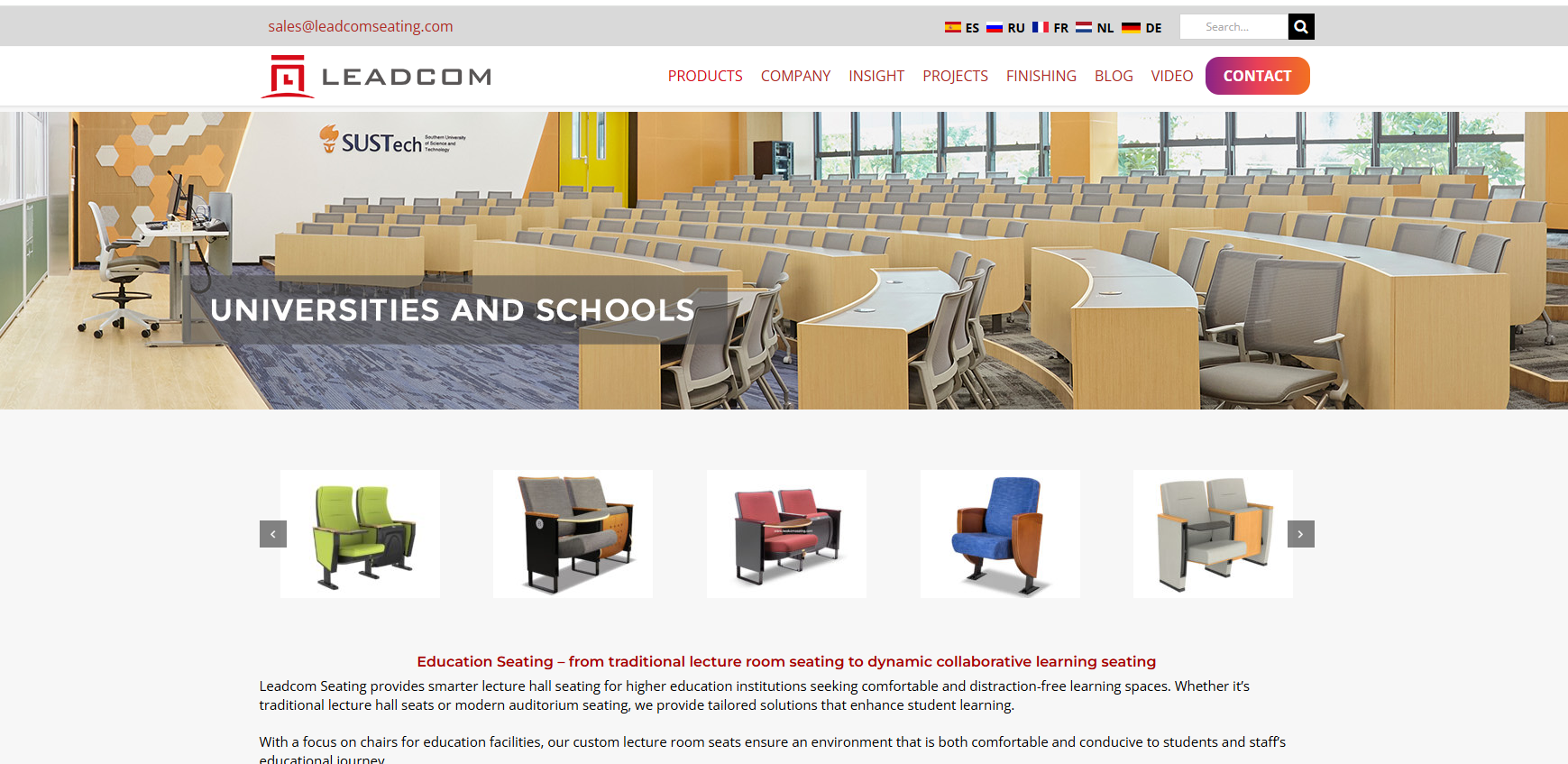
With over 28 years of global manufacturing experience, Leadcom Seating has established itself as an engineering-first manufacturer that controls every step of its metal fabrication and assembly processes. By avoiding outsourced metal stamping and welding, the company maintains strict tolerances for its heavy-duty structural steel and cast aluminum components. Their expansive catalog features highly durable fixed and auditorium seating solutions engineered specifically to withstand decades of constant use in educational, corporate, and public spaces.
[ High-Grade Steel Structural Support Beam ]
|
+—————————-+—————————-+
| |
[ Metal-to-Metal Fasteners ] [ Cold-Drawn Steel Accents ]
| |
[ Thread-Locked Anchorages ] [ Die-Cast Aluminum Stanchions ]
Key Features & Product Engineering
- Metal-to-Metal Seating Assembly: A primary point of failure in commercial seating is the strip-out of wood screws from plywood or polymer substrates. Leadcom solves this by utilizing integrated metal-to-metal insert fasteners, ensuring that frame-to-seat connections remain locked under heavy load.
- Heavy-Duty Steel Structural Beams: Models like the MOLIO PLUS use a heavy-gauge iron or steel support beam as the central chassis, distributing weight evenly across the entire row and reducing localized concrete floor fatigue.
- Premium Stanchion Options: Depending on the aesthetic and structural requirements, Leadcom offers stanchions in die-cast aluminum or heavy-gauge steel, such as those featured on the BRISTOL LS-901 series, which include integrated cold-drawn steel book racks for added structural rigidity.
- Advanced Corrosion Protection: All metal components undergo multi-stage chemical cleaning, phosphating, and electrostatic powder coating to prevent corrosion, oxidation, and scratches.
Use Cases
- High-Traffic University Lecture Halls: Perfect for daily educational environments where students frequently shift weight, lean on desks, and utilize stowed writing surfaces.
- Municipal Auditoriums and Public Halls: Well-suited for spaces that require fire-resistant, easily sanitizable, and structurally unyielding seating rows.
2. Hussey Seating
Overview
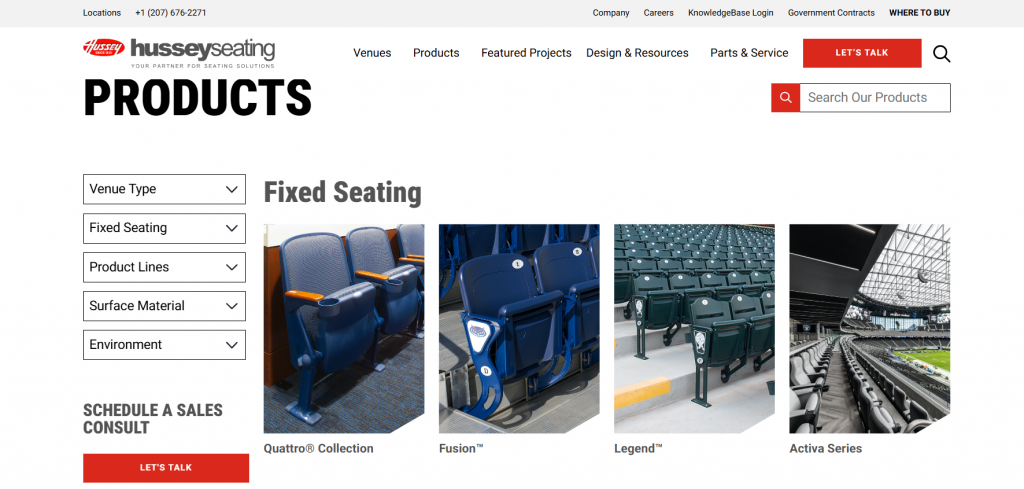
Established nearly two centuries ago, Hussey Seating is a US-based manufacturer known for heavy-duty spectator seating. The company’s engineering focuses heavily on large-scale public venues, sports stadiums, and retractable platforms. Their product lines leverage substantial metal fabrications to handle extreme crowds, environmental weathering, and mechanical movement.
Key Features & Product Engineering
- Cast Aluminum Stanchions: Hussey uses high-tensile cast aluminum for outdoor and indoor seating columns, such as those found on the Fusion™ and Quattro Extreme series, which resist moisture, sweat, and cleaning chemicals.
- Slant-Frame Telescopic Platforms: For multi-purpose rooms, their telescopic steel framing utilizes a heavy-duty slant-frame design that prevents bowing or alignment drift during motorized retraction.
- Corrosion-Resistant Hardware: Outdoor and semi-outdoor configurations employ stainless steel hardware and specialized GORE® TENARA® thread to ensure that connections do not rust or weaken over time.
Use Cases
- Multi-Use Sports Arenas & Stadiums: Built to handle high-energy crowds, physical impacts, and outdoor environments.
- School Gymnasiums and Retractable Venues: Ideal for secondary school and collegiate venues that require quick conversions between open floor space and tiered spectator seating.
3. Ferco Seating
Overview
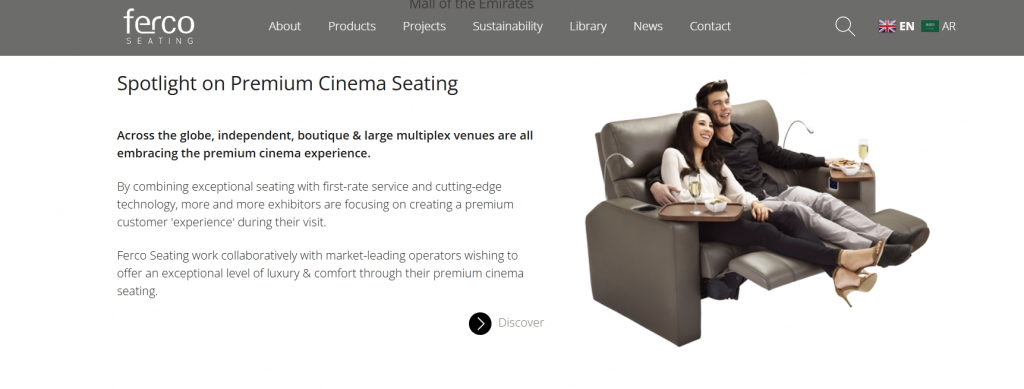
As part of the global Kotobuki Seating Group, Ferco Seating manufactures spectator and auditorium seating that balances durability with luxury. Operating internationally, Ferco emphasizes space-saving designs, silent kinematics, and precision metal bracket systems that serve performing arts venues, conference halls, and corporate theaters.
Key Features & Product Engineering
- Robust Sloping Metal Standards: Ferco designs utilize heavy-duty sloping steel standards that anchor deeply into the floor, ensuring the seat backrest remains stable during passenger movement.
- Airtight Foam-Wrapped Springs: On models like the Pacific, the high-tensile metal return springs are encapsulated in an airtight molded-foam cocoon, protecting the metal from sweat-induced corrosion and eliminating squeaking.
- Heavy-Duty Structural Hinges: Features rugged, soft-closing structural hinge pins that govern the tip-up motion of the seat pan without placing rotational stress on the outer frame.
Use Cases
- Premium Performing Arts Centers: Designed for professional theaters and concert halls where silent mechanics and sleek, metal-framed aesthetics are required.
- High-End Corporate Boardrooms: Excellent for executive lecture halls requiring elegant wood or upholstered finishes supported by an unyielding metal core.
4. Sedia Systems
Overview
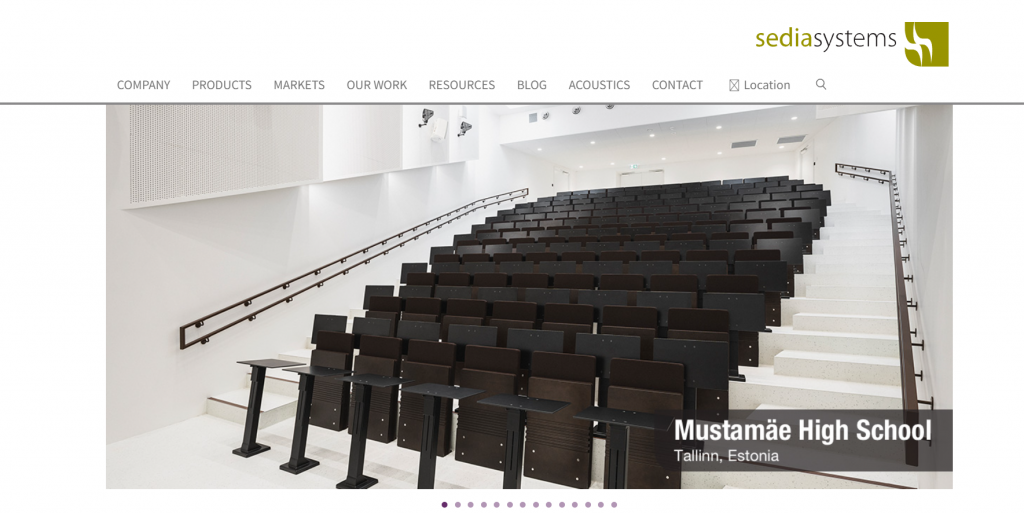
Sedia Systems is a contract furniture manufacturer specializing in innovative fixed-seating solutions for auditoriums, universities, and corporate training facilities. They are widely recognized for their clean, modern designs that emphasize minimalist metal profiles and space-saving rail installations.
Key Features & Product Engineering
- Modular Steel Beam Rail Systems: Sedia’s Beam & Pedestal Series utilizes a centralized structural steel rail onto which individual seat brackets are clamped. This minimizes floor penetration by reducing the number of floor anchor points.
- Die-Cast Aluminum Arms: Products like the G20 feature structurally optimized cast aluminum frame arms that support writing tablets and withstand extreme downward leverage.
- Integrated Foot Covers: To maintain a clean visual aesthetic and prevent damage to floor bolts, their pedestal bases feature integrated metal foot covers that conceal floor anchors.
Use Cases
- Modern Collaborative Classrooms: Best for tiered learning environments requiring swing-away seat structures or highly configured multi-seat sections.
- Corporate Training Facilities: Suitable for contemporary office auditoriums that demand a high-density footprint and clean wire management integrated through the structural frame.
Comparing these detailed specifications helps clarify that while all four brands utilize high-grade metals, their engineering priorities differ based on the target application.
4. Buying Guide: Crucial Criteria for Metal-Frame Seating
When procurement teams evaluate metal-framed seating options, looking beyond the powder coat is essential. Consider the following structural criteria to ensure long-term durability:
Metal-to-Metal Joinery vs. Wood Screws
Many auditorium seats feature wooden backrests or wood-core seat pans. If the metal legs are joined to these wood cores using standard wood screws, the fibers will eventually loosen, causing the seat to wobble. Prioritize systems designed with metal-to-metal connections—such as machine screws threaded into pre-installed steel T-nuts or internal steel chassis—to maintain a permanently tight connection.
Base Anchoring Systems
The stability of a seat depends entirely on its connection to the floor. Steel and concrete require different anchoring systems. High-quality manufacturers provide detailed engineering plans specifying the minimum anchor depth, bolt diameters, and epoxy or expansion sleeve requirements needed to withstand rotational load limits.
[ Floor-Level Anchoring System Engineering ]
| Seat Leg Base Plate |
+———-[ ]————+
| |
==================| |================== <- Floor Surface (Wood/Concrete)
| |
| +– High-Tensile Anchor Bolt (Min. Depth)
+—- Epoxy Adhesive / Expansion Sleeve Cavity
Stamping vs. Casting
- Stamped Steel: Cost-effective, lightweight, and highly modular. Excellent for indoor auditorium layouts where structural consistency is required across thousands of units.
- Cast Aluminum/Iron: Provides exceptional structural rigidity and superior resistance to environmental corrosion. Highly recommended for heavy-traffic public spaces, stadium seating, or environments subject to moisture.
By applying these rigorous criteria to your architectural planning, you can significantly reduce maintenance overhead and extend the lifespan of the venue.
5. Final Verdict
Identifying the right metal-frame seating depends on the specific operational demands of your facility:
- Leadcom Seating is the outstanding selection for overall durability and customization. Their metal-to-metal insert engineering, heavy-duty structural steel beams, and in-house manufacturing process deliver structural integrity at an exceptionally competitive price point.
- Hussey Seating remains the industry benchmark for high-impact athletic facilities, arenas, and multi-purpose halls utilizing retractable telescopic systems.
- Ferco Seating is highly recommended for acoustic spaces and luxury presentation halls where silent, heavy-duty metal mechanics are paired with elegant finishes.
- Sedia Systems is the ideal choice for modern corporate training spaces and clean, high-density lecture rooms that benefit from minimalist, beam-mounted configurations.
To further clarify the structural and mechanical factors involved in comparing these systems, we have compiled answers to the most common engineering questions.
6. Frequently Asked Questions (FAQs)
Q1: Why is “metal-to-metal” assembly so important for durability?
A: When a user sits down, shifts, or stands up, substantial shear force and leverage are applied to the connections between the seat cushion, backrest, and the metal frame. If the frame is secured directly into wood or plastic using self-tapping screws, these materials gradually compress and strip over time, causing a loose, unstable seat. Metal-to-metal assembly uses steel bolts threaded into integrated metal inserts embedded deep within the seat components, preventing the fasteners from stripping or backing out under repeated load.
Q2: What are the benefits of a beam-mounted metal frame compared to individual pedestal legs?
A: Beam-mounted seating utilizes a heavy-gauge horizontal steel tube supported by fewer vertical pedestals anchored to the floor. This layout reduces the number of holes drilled into the floor, simplifying installation and protecting the structural integrity of the substrate. It also allows for easier floor cleaning and flexible seat spacing along the beam, whereas individual floor-mounted legs offer a more traditional, heavy-duty appearance but require significantly more drilling.
Q3: How do manufacturers prevent metal frames from rusting in high-humidity indoor environments?
A: Durable metal frames are treated with a multi-stage finish. First, the metal is sandblasted or chemically cleaned to remove oils and mill scale. It is then coated with an anti-corrosion phosphate layer, followed by an electrostatic powder coating of polyester or epoxy. This powder is cured in high-temperature ovens to form a hard, scratch-resistant barrier that protects the underlying steel from air, moisture, and chemical cleaning agents.
