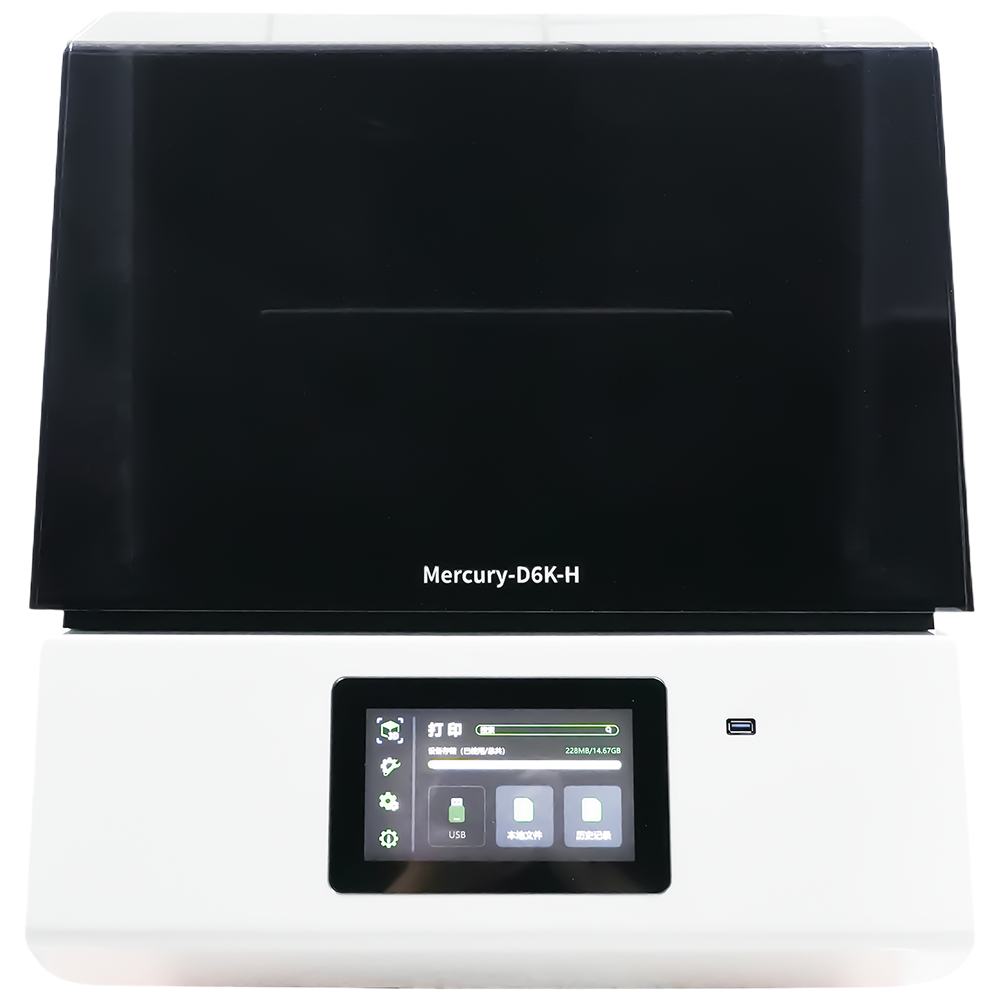
The emergence of LCD 3D printers has marked a significant advancement in additive manufacturing technology. Utilizing Liquid Crystal Display (LCD) screens for curing resin, these printers provide a cost-effective and efficient method for creating high-resolution models. With the growing popularity of MSLA (Masked Stereolithography) 3D printing, many businesses are exploring the advantages and applications of LCD 3D printers across various industries.
Understanding LCD 3D Printing Technology
LCD 3D printers work by using an LCD screen to project light onto a liquid resin, curing it layer by layer. This process enables faster printing speeds and improved detail compared to traditional methods. Devices like the SoonSer Mercury-D6K-H leverage advanced LCD 3D printing technology, delivering impressive accuracy and exceptional surface quality, making them suitable for specialized applications in dental labs and precision industries.
Key Features of LCD 3D Printers
One of the standout features of the SoonSer Mercury-D6K-H is its large format with a build volume of 288×162×160 mm. This enables the printer to produce up to 22 full-arch models in a single job, showcasing its efficiency in high-demand environments. Additionally, with over 95% photo-homogeneity, users can expect consistent performance and a longer lifespan from this LCD 3D printer. These attributes make it a reliable choice for laboratories and businesses seeking high-accuracy solutions.
The SoonSer Advantage in 3D Printing
As industries continue to adopt advanced technologies, the demand for high-quality 3D printing solutions grows. The SoonSer Mercury-D6K-H stands out in the field of MSLA 3D printing, combining user-friendly design with powerful capabilities. This LCD 3D printer is ideal for businesses that require precision and speed in production. By investing in SoonSer’s cutting-edge 3D printing technology, companies can enhance their operational efficiency and maintain a competitive edge in the market.
