The global shift toward remote and hybrid work models has permanently altered the landscape of enterprise connectivity. For many professionals, home internet is now synonymous with the office network, making reliability and speed paramount for maintaining productivity. While standard residential broadband services are adequate for basic consumption, they often fall short when supporting the demanding, upstream-heavy requirements of corporate applications, high-definition video conferencing, and large file synchronization. For companies seeking a robust, scalable, and centrally manageable solution for their distributed workforce, the 4G LTE Cat 6 router emerges as a practical and high-performance choice, bridging the gap between basic consumer access and enterprise-grade expectations.
Why the Cat 6 Router is the Connectivity Sweet Spot for Remote Work
The selection of a mobile broadband device for a permanent remote office setup requires balancing cost against essential performance metrics. The Category 6 (Cat6) classification for 4G LTE technology provides an optimized balance, offering significant throughput improvements over previous generations without the higher hardware cost often associated with 5G Fixed Wireless Access (FWA). A dedicated Cat 6 router delivers theoretical maximum downlink speeds of up to 300 Mbps, a capacity that is more than sufficient to comfortably handle the simultaneous demands of a working professional: participating in uninterrupted 4K video meetings, securely accessing virtual desktop infrastructure (VDI), and uploading critical business data to the cloud.
The stability delivered by a premium 4G LTE Cat 6 router is arguably more important than its peak speed. Unlike simple mobile hotspots that often sacrifice signal integrity for portability, dedicated CPE (Customer Premises Equipment) devices are designed with superior internal and external antenna architecture. This design focus ensures a stronger, more consistent connection to the cellular tower, minimizing the packet loss and latency spikes that can derail time-sensitive work activities. The result is a seamless work experience that mimics a fixed-line connection but retains the flexibility of cellular deployment, making the Cat 6 router an indispensable tool for distributed enterprise teams and temporary office setups.
Stability and Features of Professional CPE Devices
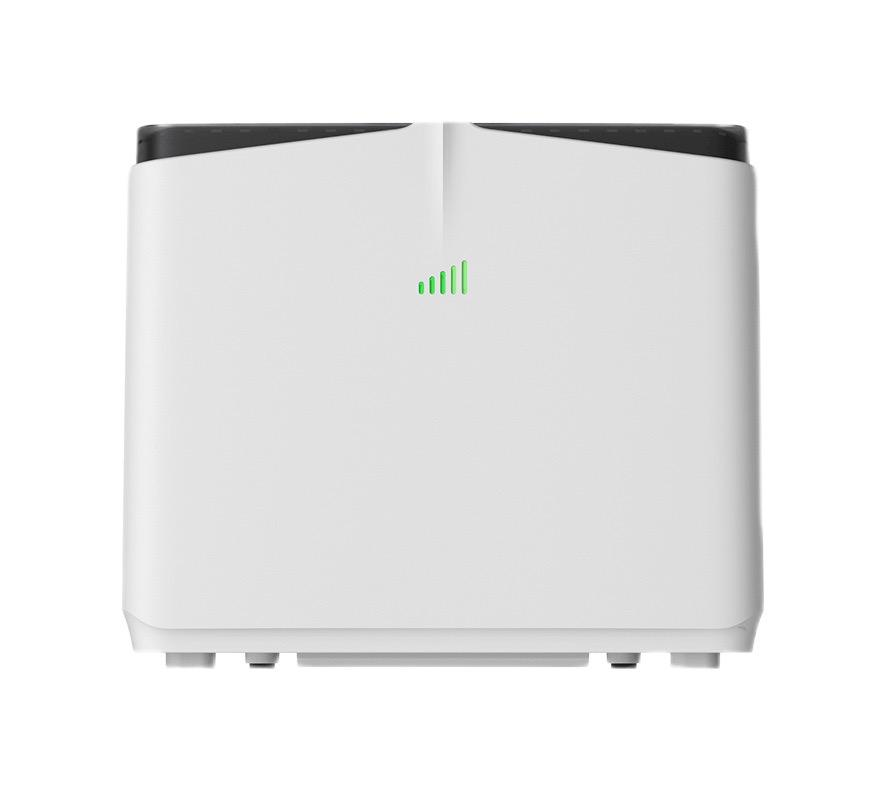
For a permanent remote work environment, the physical form factor and integrated features of the device are crucial for long-term stability and network integration. The CPE device, such as the Wewins Cat6 CPE C270 model, is designed as a desktop unit. Unlike battery-powered MiFi devices, a CPE connects directly to an AC power source, eliminating battery management issues and ensuring continuous, stable operation, which is critical for 24/7 corporate access. Furthermore, these professional units offer enhanced wired connectivity options.
A typical 4G LTE Cat 6 router in the CPE form factor, like the C270, features multiple Gigabit Ethernet ports. These ports allow a professional to hard-wire their work computer, VoIP phone, or local network switch, guaranteeing maximum speed and minimum latency for essential services. The integrated high-power Wi-Fi broadcasting capabilities also ensure comprehensive wireless coverage throughout a typical home office space, providing reliable connectivity for secondary devices. Wewins ensures that its hardware is built with these professional integration needs in mind, featuring robust casings and advanced thermal management to maintain optimal performance during periods of heavy, continuous data transfer—a common occurrence in remote corporate roles. This comprehensive suite of features transforms the device from a mere internet access point into a robust, integrated home networking solution.
Wewins: Prioritizing Corporate Manageability and Quality
When enterprises procure hardware for thousands of employees, the manufacturer’s focus on quality, manageability, and lifecycle support becomes a vital factor. Wewins specializes in developing professional-grade networking hardware, ensuring that their Cat 6 router and CPE devices are not simply consumer electronics rebranded for business. They focus on industrial-grade components and rigorous testing protocols necessary for sustained operational lifecycles. This commitment to durability minimizes failure rates and reduces the total cost of ownership (TCO) for large corporate deployments.
Crucially for IT departments, the devices developed by Wewins support standard remote management protocols. This allows corporate IT teams to provision, diagnose, and push firmware updates to a vast fleet of remote 4G LTE Cat 6 router units centrally. This remote access capability is essential for enforcing corporate security policies and maintaining consistent network configurations across all employee homes without requiring on-site intervention. The strategic partnership with a reliable supplier like Wewins provides the confidence that the critical connection maintaining the remote workforce is both fast and secure. This makes the Cat 6 router a non-negotiable part of a resilient remote work strategy.
A Foundational Investment for the Distributed Enterprise
In shorts, for enterprises committed to the future of remote work, a high-quality Cat 6 router provides the necessary blend of performance, stability, and professional manageability. The CPE form factor, exemplified by Wewins’ dedication to durable, feature-rich hardware, offers a superior solution to standard mobile hotspots or reliance on variable residential connections. By choosing a specialized manufacturer focused on B2B needs, companies can secure their distributed workforce with dependable, high-speed mobile broadband, ensuring seamless business continuity and sustained productivity.
