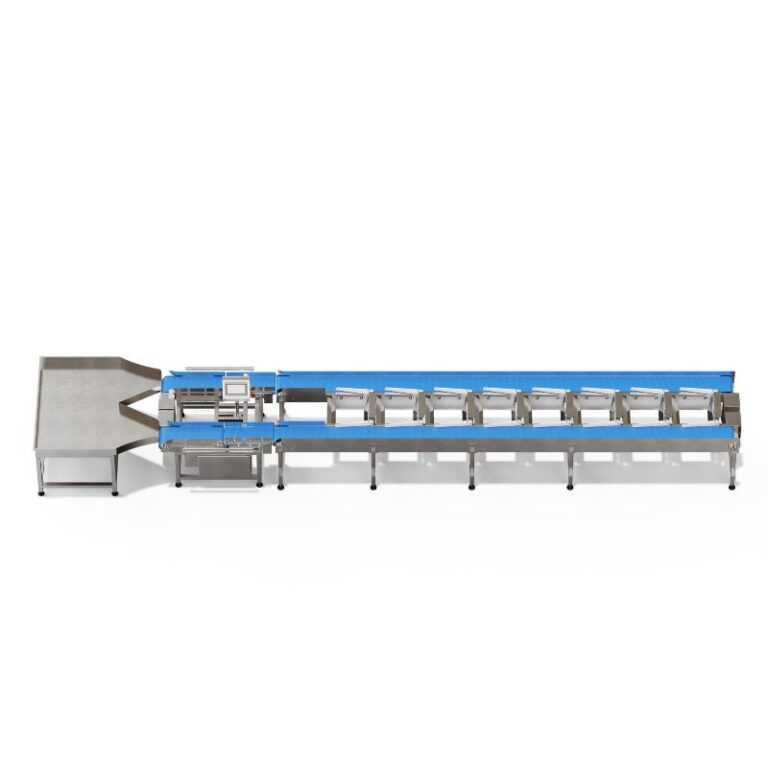
Categorizing equipment by its operational principle provides clarity for selection in industrial settings. Various weight sorting machine designs exist, each suited to specific product characteristics and throughput requirements. Understanding these differences allows businesses to align their WEIGHT SORTING needs with the appropriate technology.
In-Motion Dynamic Weighing Systems
This common type of weight sorting machine operates by weighing products as they move continuously on a conveyor belt. Items pass over a high-precision load cell that captures their weight data instantaneously. Based on pre-set thresholds, a rejection mechanism, such as an air jet or a push arm, diverts items into the correct category. This system is applicable for a wide range of packaged goods and fresh produce where high-speed sorting is necessary.
Combination Weighing and Multi-Lane Systems
For loose, free-flowing products like snacks, nuts, or hardware, a combination weigher system is often employed. This sophisticated WEIGHT SORTING machine uses multiple overhead hoppers to compute the optimal combination of portions to reach a target weight quickly. It ensures precise portion control before directing the product to packaging, maximizing accuracy and minimizing giveaway.
Static Checkweighing and Manual Offload Units
In applications requiring high precision for heavier items or audit purposes, static checkweighers are used. This variant of a WEIGHT SORTING machine requires the product to pause momentarily on a weighing platform for measurement. While slower than dynamic systems, it offers very high accuracy. The result can trigger a manual or automated offload process for accept/reject decisions.
The operational demands of a production line dictate the suitable type of WEIGHT SORTING machine. Factors such as product format, required speed, and accuracy tolerance guide the choice between dynamic, combination, and static systems. A precise match between the technology and the application ensures the WEIGHT SORTING process delivers optimal efficiency and cost-effectiveness.
